Common VPD Mistakes Growers Make (And How to Fix Them)
Most growers hurt their plants by relying on humidity alone, ignoring temperature shifts, growth stages, and leaf temperature—leading to hidden stress, poor nutrient flow, and disease. VPD mistakes compound over time, quietly reducing growth even when everything else seems right. Using a VPD tool and making small, consistent adjustments ensures optimal conditions and unlocks your plant’s full potential.
Table of Contents
Why VPD Mistakes Can Hurt Your Plants
Most growers check humidity. Some check temperature. But very few check VPD — and that small mistake can quietly damage an entire grow.
VPD stands for Vapor Pressure Deficit. In simple terms, it measures how “thirsty” the air is. It tells you how hard the air is pulling moisture out of your plant’s leaves. When that pulling force is too strong or too weak, your plant struggles — even if everything else looks fine.
Here is what actually happens when VPD is wrong:
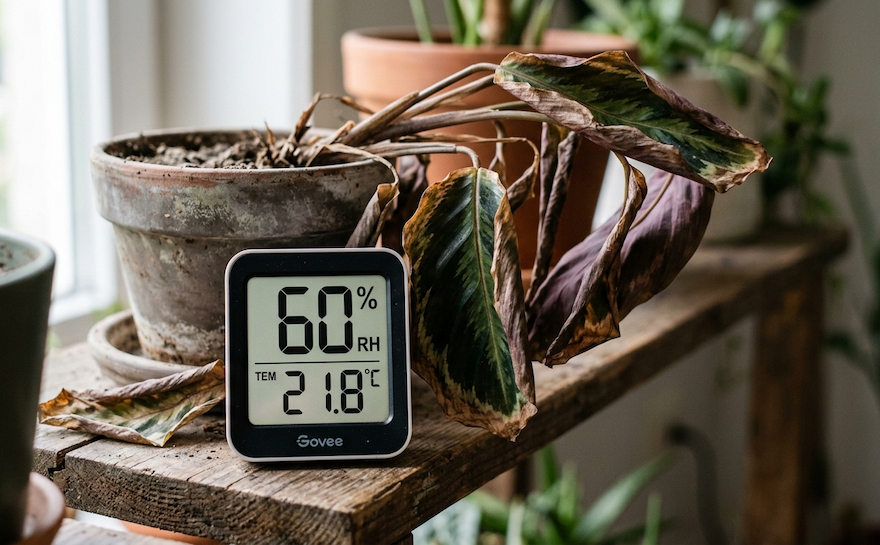
Your plant gets stressed without you knowing. Plants breathe through tiny openings in their leaves called stomata. When VPD is too high, the air pulls water out too fast. The plant panics and closes those openings to protect itself. When VPD is too low, those openings stay barely open because the air is already too wet to exchange moisture. Either way, the plant is stressed — and stressed plants grow slowly.
Nutrients stop moving properly. Water carries nutrients from the roots up through the plant. This movement is driven partly by the plant releasing moisture through its leaves. If VPD is off, that flow slows down or stops. Your plant may have perfect nutrients in the soil, but it simply cannot absorb them well. Growers often blame their nutrients when VPD is the real problem.
Disease moves in. When VPD is too low, the air around the leaves stays wet. Wet surfaces are where mold, mildew, and fungal diseases grow. Powdery mildew, for example, loves exactly these conditions. You can have the cleanest grow space and still get disease outbreaks if VPD is consistently too low.
Growth slows down and you don’t know why. Because VPD problems don’t always show obvious symptoms right away, growers often spend weeks adjusting light, nutrients, or watering — without ever fixing the real issue. The plant just sits there, growing slowly, looking slightly off, and never reaching its potential.
The good news is that once you understand what VPD is doing to your plant, fixing it becomes much simpler. Our VPD tool shows you exactly where your grow sits right now — and if you set a target VPD, it gives you direct recommendations on what to adjust. No guessing needed.
If you want to know more about VPD, then check out our guide on Vapour Pressure Deficit (VPD).
Mistake #1: Only Watching Humidity
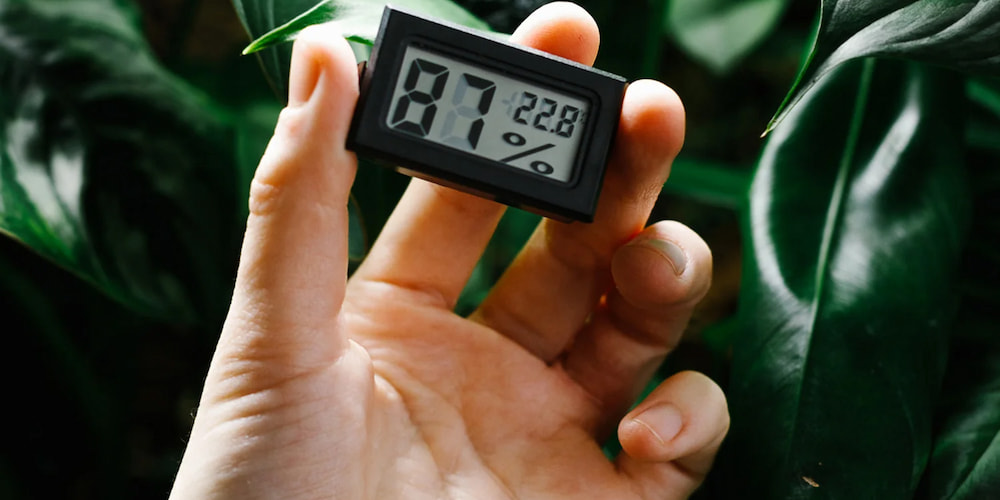
If you have a hygrometer on your wall and you check it every day, you are already doing more than most growers. But here is the problem — humidity alone does not tell you what your plant is actually experiencing. And relying on it alone is one of the most common mistakes in any grow room.
Here is why.
Humidity is only half the story
Humidity tells you how much moisture is already in the air. But it does not tell you how much more moisture the air can still take. That second part — how much pulling force the air has on your plant — is what VPD measures. Two grow rooms can have the exact same humidity reading and completely different VPD values. Your plant feels the difference, even if your hygrometer does not show it.
Temperature changes everything
Warm air can hold much more moisture than cool air. This means that at the same humidity level, a warmer room will pull water out of your plant much faster than a cooler room.
Here is a simple example:
Your humidity reads 60%. Sounds fine, right?
- If your room is 25°C (77°F), your VPD is in a healthy range.
- If your room heats up to 30°C (86°F), that same 60% humidity now creates a VPD that is too high. The air becomes much thirstier. Your plant starts closing its stomata and slowing down — even though your hygrometer still reads 60%.
Nothing changed on your meter. Everything changed for your plant.
This is why growers get confused
They see a stable humidity number and assume everything is fine. But their lights are raising the temperature. Or the season changed. Or they moved their fan. Any of these things shifts the temperature, and suddenly VPD is in the wrong zone — without the humidity reading moving at all.
Watching humidity without watching temperature is like checking if it is raining without checking how hard. The number alone does not give you the full picture.
What to do instead
You need both temperature and humidity together to understand what is really happening in your grow space. That is exactly what VPD combines into one number. Our VPD tool takes both values, calculates your current VPD instantly, and shows you where you land on the chart — in the safe zone, too high, or too low. You do not need to do the math. You just need to read the result and act on it.
If you are unsure about the difference between humidity and VPD, our guide "VPD vs Humidity: What's the Difference?" explains it in plain language with clear examples.
Mistake #2: Ignoring Temperature Changes
Most growers set their temperature once and move on. They dial in their thermostat, check it during the day, and assume the grow room stays consistent. But temperature in a grow space is rarely stable — and every time it shifts, your VPD shifts with it, whether you notice or not.
The biggest shift happens between day and night.
What happens when the lights go off
During the day, your grow lights produce heat. That heat raises the air temperature, which raises VPD. When the lights turn off at night, the temperature drops — sometimes by 5°C to 10°C (9°F to 18°F) — quickly and quietly. Your humidity might barely move. But your VPD can drop from a healthy range straight into a danger zone.
Here is a simple example to make this real:
Condition | Temperature | Humidity | VPD |
Lights On (Day) | 28°C / 82°F | 65% | ~1.2 kPa ✅ Healthy |
Lights Off (Night) | 19°C / 66°F | 63% | ~0.6 kPa ⚠️ Too Low |
The humidity barely changed. But the VPD dropped in half. At night, the air became much less thirsty. Moisture starts sitting on the leaves instead of being drawn away. That is exactly when mold and mildew take their opportunity.
Why growers miss this completely
Most growers check their grow room during the day — when the lights are on and everything looks good. They rarely check conditions at 3am when the lights have been off for hours and the temperature has dropped. So the problem happens in the dark, literally and figuratively.
It is not just day and night
Temperature changes happen throughout the day too. Lights warming up at the start of a cycle. A hot afternoon raising the room temperature in a greenhouse. A cold draft from an AC unit. Each one of these shifts your VPD — and your plant responds every single time, even if you do not see it.
Plants do not get a break from bad VPD
If VPD is wrong for even part of the day, the plant pays the price during that window. Stomata close. Moisture builds up. Or the plant loses water faster than it can absorb. Over days and weeks, these repeated stress cycles add up to slower growth and weaker plants — even if your daytime conditions look perfect.
What to do instead
Track temperature at different times — not just once during the day. Pay attention to what happens when lights turn on, when they reach full power, and when they switch off. If you enter both your daytime and nighttime temperature and humidity into our VPD tool, you will immediately see how different those two conditions are on the chart. Many growers are genuinely surprised the first time they do this.
Mistake #3: Not Using a VPD Chart or Tool
A lot of growers manage their grow space by feel. They walk in, sense the air, check the humidity meter, and make adjustments based on experience. And while experience matters, when it comes to VPD, guessing almost always leads to being slightly — or significantly — wrong. And slightly wrong, repeated every day for weeks, adds up to real losses.
Here is the honest truth: VPD is not something the human body can detect accurately. You cannot feel the difference between a VPD of 0.8 kPa and 1.4 kPa. But your plant absolutely can.
Why guessing does not work
VPD is calculated from two values — air temperature and relative humidity — combined in a specific way. The relationship between these two numbers is not simple or straight. A small temperature change at one humidity level can have a very different effect than the same change at a different humidity level. There is no reliable shortcut. You either calculate it or you guess — and guessing means your plant is living in unknown conditions every single day.
Here is what that looks like in practice:
What the Grower Thinks | What Is Actually Happening |
“Humidity is at 55%, should be fine” | VPD could be too high depending on temperature |
“I lowered humidity a bit, that should help” | VPD may have jumped into the stress zone |
“Temperature feels comfortable to me” | Plants experience temperature differently than humans |
“Growth is slow but I don’t know why” | VPD has been in the wrong zone for weeks |
A VPD chart solves the guessing problem
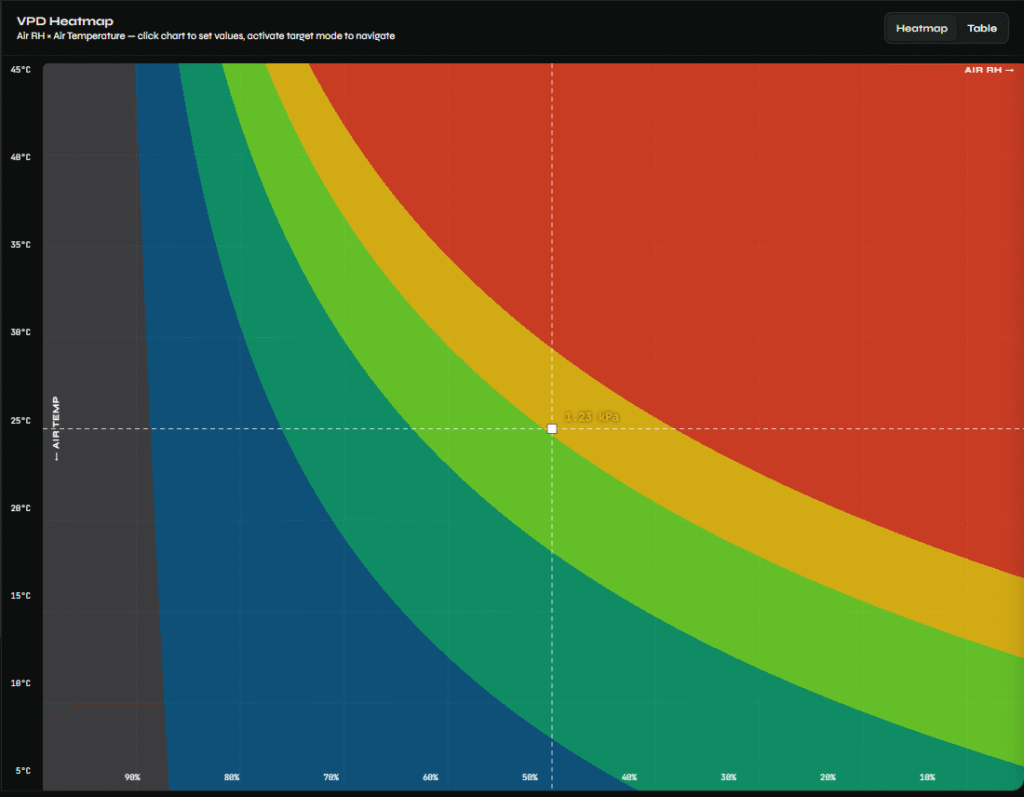
A VPD chart maps out temperature and humidity together and shows you exactly which zone you are in — healthy, too high, or too low. Instead of doing any math, you simply find your temperature on one axis, your humidity on the other, and the chart tells you where you stand. It turns a complicated calculation into a simple visual answer.
But a static chart — the kind you print out or find as an image online — has real limits. It cannot tell you what to change. It cannot update when your conditions change. It just sits there.
This is where a proper VPD tool changes everything
Our VPD tool goes far beyond a basic chart. You enter your current temperature and humidity, and it instantly shows your VPD value and plots it on an interactive chart so you can see your zone visually. But the part that most growers find genuinely useful is the target feature — you set the VPD value you want to reach, and the tool tells you exactly what to adjust. Raise temperature by this much. Lower humidity to this level. It gives you a clear action, not just a number.
No experience required. No math. No guessing.
Simple tools remove the barrier completely
The growers who get the best results are not always the most experienced. They are the ones who use the right information at the right time. A VPD tool gives every grower — beginner or advanced — the same accurate information that used to take years of trial and error to develop.
Want to learn how to read a VPD chart step by step? Our guide "How to Read a VPD Chart (Step-by-Step)" walks you through everything with clear visuals and plain explanations.
Mistake #4: Forgetting About Growth Stages
Here is a mistake that even experienced growers make. They find a VPD range that seems to work, set their environment, and leave it there for the entire grow. Same temperature. Same humidity. Same VPD — from the first day of seedling all the way to harvest.
It feels logical. If a number works, why change it?
But here is the problem. Your plant is not the same plant it was four weeks ago. It has different leaves, different roots, a different ability to handle stress, and completely different needs. A VPD that is perfect for a mature vegetative plant can be genuinely harmful to a young seedling. And a VPD set for seedlings will hold back a flowering plant from reaching its full potential.
Think of it like dressing for the weather — but the weather changes as your plant grows. A seedling is fragile. Its root system is small and cannot move much water yet. Its leaves are thin and new. If VPD is too high at this stage, the air pulls water out faster than the roots can replace it. The seedling wilts and struggles before it ever has a real chance.
A plant in the vegetative stage is stronger. Its roots are established. It can handle more airflow and a slightly higher VPD. In fact, a moderate VPD at this stage encourages the plant to drink more, which drives nutrient uptake and faster growth.
A flowering plant has a different priority altogether. It is focused on producing flowers, not just growing leaves. It needs a carefully managed VPD — high enough to keep moisture moving, low enough to protect dense buds from moisture buildup and mold.
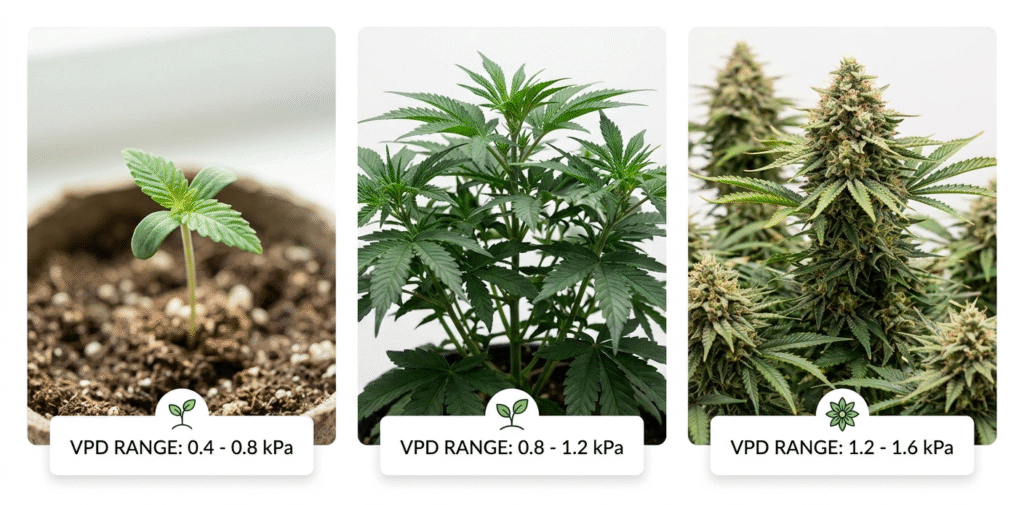
Here are the general VPD ranges for each stage:
Every time your temperature or humidity changes — which happens constantly in a grow room — your VPD changes too. That means recalculating over and over again throughout the day.
One small mistake in the formula gives you a wrong number. A wrong number leads to a wrong decision. A wrong decision stresses your plants.
Manual math made sense before good tools existed. It doesn’t anymore.
Growth Stage | Recommended VPD Range | Why |
Seedling / Clone | 0.4 – 0.8 kPa | Fragile roots, low water movement capacity, needs gentle air |
Early Vegetative | 0.8 – 1.0 kPa | Roots establishing, moderate transpiration encouraged |
Late Vegetative | 1.0 – 1.2 kPa | Strong roots, higher transpiration supports nutrient uptake |
Flowering | 1.0 – 1.5 kPa | Active growth but bud protection from moisture is critical |
Late Flowering | 1.2 – 1.6 kPa | Maximum transpiration efficiency, low moisture risk needed |
Note: These are widely used general guidelines. Exact ranges can vary slightly by plant species and environment.
What happens when you ignore growth stages
A grower running 1.4 kPa through the entire grow might have perfect flowering conditions — but their seedlings were under constant stress from day one. By the time the plant looks healthy in week four, it has already lost two weeks of potential growth recovering from early stress. The grower never connects it back to VPD because the plant eventually looks fine.
This is a hidden cost. You do not always see the damage. You just never see the full potential either.
What to do instead
Treat each growth stage as its own environment. When your plant moves into a new stage, adjust your temperature and humidity to match the new VPD target. You do not need to make big changes — often a small humidity shift is all it takes.
Our VPD tool makes this easy. Set your target VPD for the current growth stage, enter your current temperature and humidity, and the tool will tell you exactly what needs to change to hit that target. As your plant moves through stages, simply update your target and get new recommendations. The tool adjusts with your plant.
Mistake #5: Ignoring Leaf Temperature
Here is something most growers never think about. When you measure the temperature in your grow room, you are measuring the air. But your plant’s leaves are not the same temperature as the air around them. They can be warmer. They can be cooler. And that difference — even just a few degrees — changes your actual VPD in a way that your thermometer will never show you.
This is one of the least talked about VPD mistakes, and it catches even experienced growers off guard.
Why leaf temperature is different from air temperature
Leaves are living surfaces. They absorb light and heat from your grow lights. They also cool themselves down by releasing moisture — the same way sweat cools your skin. Depending on how much light they receive, how much water they are transpiring, and how much airflow is moving around them, leaves can run anywhere from 1°C to 5°C (2°F to 9°F) cooler or warmer than the surrounding air.
Here is a simple way to think about it. Imagine standing outside on a sunny day. The air temperature is 22°C (72°F). But you are standing in direct sunlight and your skin feels much hotter than that. Your body is absorbing more heat than the air temperature suggests. A plant leaf under a powerful grow light works the same way.
How this affects your VPD readings
Standard VPD calculations use air temperature. But the more accurate way to calculate VPD is to use leaf temperature — because the leaf surface is where the actual moisture exchange between plant and air happens. If your leaf is warmer than the air, the real VPD your plant is experiencing is higher than what your tool shows. If the leaf is cooler, the real VPD is lower.
Here is a practical example:
Measurement | Temperature | Humidity | Calculated VPD |
Air temperature reading | 25°C / 77°F | 60% | ~1.0 kPa ✅ Healthy |
Actual leaf temperature | 28°C / 82°F | 60% | ~1.3 kPa ⚠️ Getting High |
Actual leaf temperature | 22°C / 72°F | 60% | ~0.7 kPa ⚠️ Too Low |
Same air. Same humidity. Three very different VPD values depending on what the leaf is actually experiencing.
When does leaf temperature matter most
Leaf temperature becomes especially important in these situations:
Lights are very close to the canopy. Intense light heats the top leaves significantly above air temperature. VPD at the canopy can be much higher than your readings suggest.
Poor airflow around plants. Without air movement, heat builds up on leaf surfaces. Leaves cannot cool themselves through transpiration efficiently. Temperatures rise and so does real VPD.
Cold root zones. When roots sit in cold water or cold growing medium, the plant absorbs less water. Less water moving through the plant means less evaporative cooling at the leaf. Leaf temperature rises quietly.
Humidity is very high. When the air is already very moist, leaves cannot release moisture easily. The cooling effect slows down. Leaf temperature climbs closer to — or above — air temperature.
You do not need expensive equipment to account for this
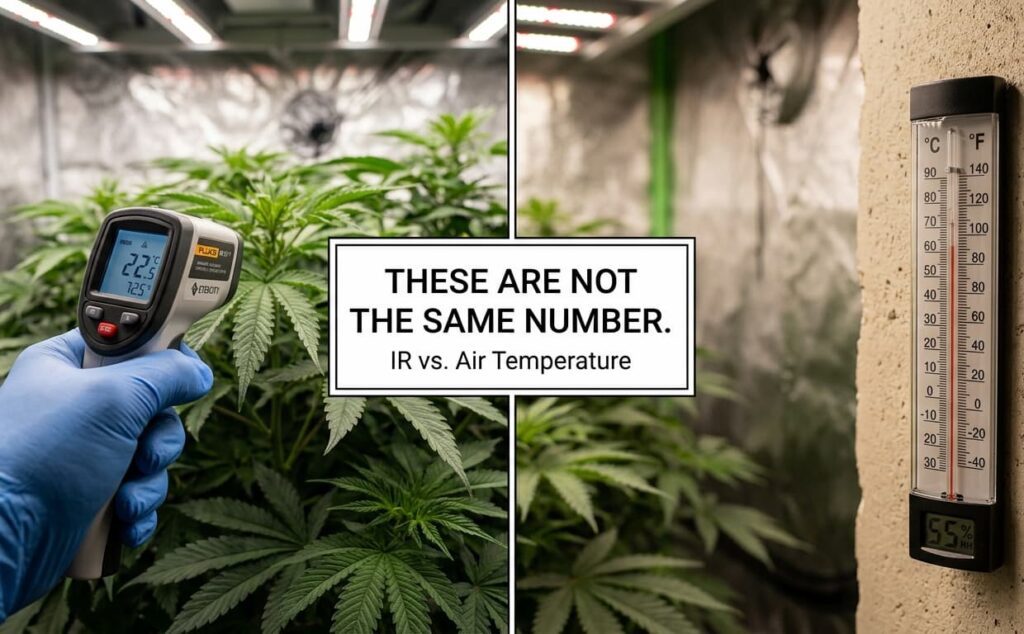
An infrared thermometer — also called a laser thermometer — costs very little and lets you point at a leaf and read its surface temperature in seconds. Many serious growers keep one in their grow kit alongside their hygrometer. It takes one extra reading but gives you a much more honest picture of what your plant is actually experiencing.
Once you have your leaf temperature, use that number instead of your air temperature when entering values into our VPD tool. The result will reflect the real conditions at the leaf surface — which is where VPD truly matters. For most grows, the difference will be small. But in high-intensity setups or during hot periods, it can shift your entire zone reading.
Real Example From a Grow Tent
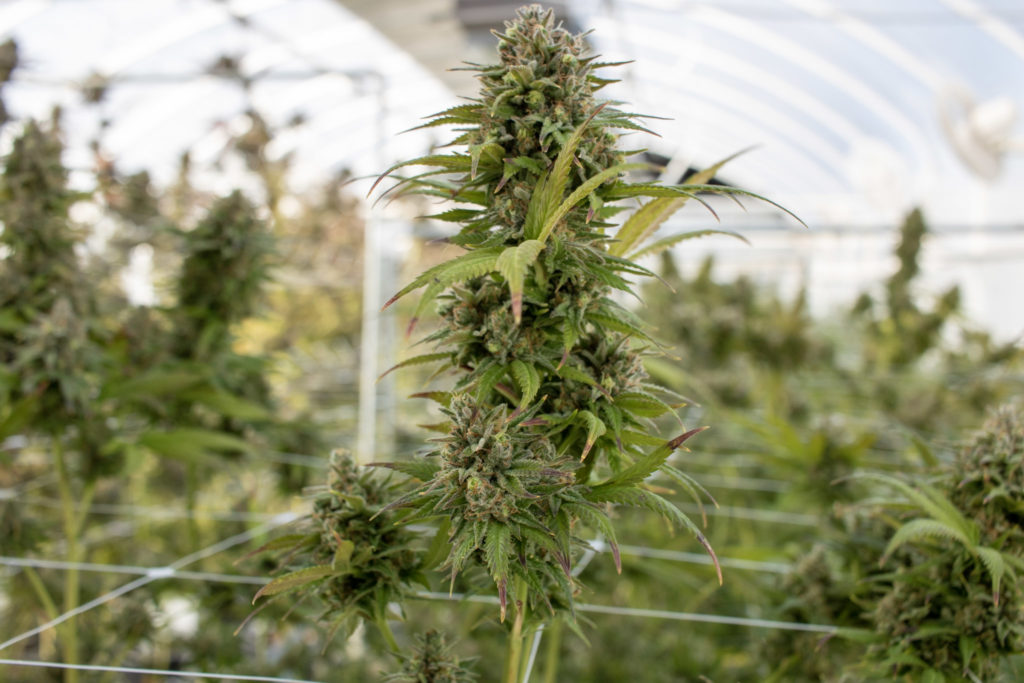
Sometimes the best way to understand a concept is to see it play out in a real situation. The following is a simple, realistic example of what happens when VPD goes wrong — and what changes when it gets fixed.
Meet the grower and the problem
A home grower is running a 1.2m x 1.2m grow tent with four plants in the vegetative stage. They have been growing for a few years. They check humidity regularly, keep it around 55 to 60 percent, and feel fairly confident in their setup. But three weeks into vegetative growth, the plants look slow. Leaves are slightly cupped. Growth has almost stalled. The grower checks everything — nutrients, pH, watering schedule, light distance. Everything looks right. Nothing explains the slowdown.
Frustrated, they finally decide to check VPD properly for the first time.
What the readings showed
Time of Day | Air Temp | Humidity | VPD |
Lights On — Midday | 29°C / 84°F | 57% | ~1.6 kPa ❌ Too High |
Lights Off — Night | 18°C / 64°F | 61% | ~0.5 kPa ❌ Too Low |
The daytime VPD was too high. The grow lights were pushing the temperature up to 29°C and the humidity was not high enough to compensate. The plants were losing water too fast during the day. Stomata were closing to protect against dehydration. Nutrient uptake slowed to almost nothing.
At night, the opposite problem. Temperature dropped sharply when the lights went off. The same humidity that was too low during the day was now too high relative to the cooler air. VPD dropped into the low zone. Moisture was sitting on the leaves through the night instead of being drawn away. The conditions were ideal for mold — and the grower had no idea.
The plants were swinging between two stress zones every single day.
What the grower did to fix it
They entered their readings into our VPD tool and set a target VPD of 1.1 kPa — right in the middle of the healthy vegetative range. The tool gave them two clear recommendations.
For daytime: Raise humidity from 57% to 68% to bring the high temperature into a healthy VPD range. A simple adjustment to their humidifier setting.
For nighttime: Raise the minimum night temperature from 18°C to 22°C using their fan heater on a timer. This kept the temperature from dropping so far when the lights went off, which lifted the night VPD out of the danger zone.
Two changes. Both small. Both took less than ten minutes to implement.
What happened after the fix
Within four days, the leaf cupping stopped. The plants looked visibly more relaxed — leaves flattened out and spread naturally toward the light. By the end of the second week, growth rate had noticeably increased. New nodes were forming faster. The grower later described it as the plants finally waking up.
No new nutrients. No new lights. No major equipment change. Just the right VPD, maintained consistently across the full day and night cycle.
What this example teaches
Several mistakes were happening at the same time — and they are the exact mistakes covered in this article. The grower was watching humidity without accounting for temperature. They were not checking night conditions. They had no tool to see what VPD was actually doing. And they were spending time looking for the problem everywhere except where it actually was.
The fix was not complicated. It just required the right information first.
If your plants are underperforming and you cannot find the reason, check your VPD — at different times of day, not just once. Enter your readings into our VPD tool, set your target for your current growth stage, and let the recommendations show you what needs to change. More often than growers expect, this one check solves the mystery.
Quick Fix If You’ve Made These Mistakes
If you have read through the mistakes in this article and recognized your own grow in any of them, the good news is this — VPD problems are among the easiest grow problems to fix. You do not need new equipment in most cases. You do not need to start over. You just need to make a few small, targeted adjustments and then stay consistent.
Here is a simple and honest action plan.
Step 1: Stop guessing and get your current numbers
Before you change anything, know where you actually stand. Grab your thermometer and hygrometer and take readings at two different times — once during lights-on hours and once during lights-off hours. Write both down. This alone will tell you more than most growers learn in an entire grow cycle.
If you have an infrared thermometer, take a leaf surface reading at the canopy level during lights-on. This gives you the most accurate starting point possible.
Step 2: Enter your readings into the VPD tool and see your zone
Take those numbers and enter them into our VPD tool. Within seconds you will see your current VPD value plotted on the interactive chart. You will know immediately whether you are in the healthy zone, too high, or too low — and by how much. No math. No guessing. Just a clear visual answer.
Do this for both your daytime and nighttime readings separately. Many growers are surprised to find that one is fine and the other is the problem.
Step 3: Set your target VPD for your current growth stage
Use the target feature in our VPD tool. Enter the VPD value that matches your current growth stage — refer to the growth stage ranges covered earlier in this article if you need a reminder. Once you set your target, the tool generates specific recommendations telling you exactly what to adjust and by how much.
You will get one of these types of corrections:
What the Tool Recommends | What You Actually Do |
Raise humidity | Turn up humidifier or add a humidity source |
Lower humidity | Increase ventilation or turn up dehumidifier |
Raise temperature | Adjust thermostat or add a small heater on timer |
Lower temperature | Improve airflow or adjust AC settings |
Raise night temperature | Set fan heater on a timer for lights-off period |
None of these require new equipment in most cases. They are dial adjustments — small tweaks to what you already have running.
Step 4: Make one change at a time
This is important. If the tool recommends adjusting both temperature and humidity, do not change both on the same day. Change one, wait 24 hours, take new readings, and check your VPD again. This way you know exactly what each adjustment did and you do not overshoot into a new problem.
Slow and deliberate beats fast and chaotic every time in grow room management.
Step 5: Check again at both day and night after each adjustment
One reading is not enough. After making a change, check your VPD at lights-on and lights-off again. Enter both sets of readings into the tool. Confirm that both sit in a healthy range for your growth stage. If one is fixed and the other is not, address the remaining one using the same process.
Step 6: Build a simple monitoring habit
Once your VPD is dialed in, you do not need to check it every hour. A simple routine works well for most growers — take readings at the same two times each day, log them briefly, and check the tool whenever something changes. New growth stage, season change, new equipment, unusual weather — any of these can shift your VPD without warning. A quick check takes less than two minutes and catches problems before they compound.
A simple summary of the full fix process:
Step | Action | Time Required |
1 | Measure temperature and humidity at day and night | 5 minutes |
2 | Enter readings into VPD tool, see your zone | 2 minutes |
3 | Set target VPD for your growth stage | 1 minute |
4 | Apply one recommended adjustment | 5 to 10 minutes |
5 | Wait 24 hours, recheck and confirm | 5 minutes next day |
6 | Build a regular check-in habit | 2 minutes daily |
Total time to fix a VPD problem from start to finish — less than 30 minutes of actual effort spread over a couple of days. The plants do the rest.
What Most Growers Don’t Realize About VPD
After reading through all the mistakes in this article, it is easy to start thinking of VPD as a technical problem. A number to calculate. A range to hit. A chart to check. And while all of that is true and useful, there is a deeper way to think about VPD that changes how you approach your entire grow — and most growers never quite get there.
Here it is simply: VPD is not really about numbers. It is about plant comfort.
Your plant is always communicating. VPD helps you listen. A plant cannot tell you it is stressed. It cannot raise its hand and say the air is too dry or too wet. Instead it responds physically — closing its stomata, slowing its growth, drooping slightly, cupping its leaves. These are not random events. They are the plant’s way of managing an environment that is not quite right for it.
VPD gives you a way to hear what the plant is trying to say before the symptoms become serious. When VPD is in the right range, the plant is comfortable. It is breathing easily, moving water and nutrients efficiently, and putting all its energy into growing. When VPD is outside that range — even slightly — the plant is working harder than it should just to stay stable. That extra effort comes at a cost, and the cost is always paid in growth.
Small changes make bigger differences than most growers expect. This is the part that surprises people most. Growers often assume that a small VPD shift — say 0.2 kPa off from the ideal range — is not worth worrying about. It is close enough. But plants live in their environment continuously, every hour of every day. A small discomfort that never goes away is not a small problem. It is a constant drain.
Think about it this way. Imagine wearing shoes that are just slightly too tight. Not painful enough to stop you. But uncomfortable enough that after a full day of walking, you are more tired than you should be and your feet are sore. Now imagine wearing those shoes every day for eight weeks. That is what a slightly wrong VPD feels like to a plant across an entire grow cycle.
Getting VPD just 0.2 kPa closer to the ideal range — consistently, day and night — can produce a noticeable difference in final yield and plant health. Not because 0.2 kPa is a large number. But because consistency over time compounds in both directions. Wrong conditions compounding over weeks creates real losses. Right conditions compounding over weeks creates real gains.
The environment you create is the ceiling your plant can never grow past. No amount of premium nutrients, high-end lighting, or careful watering can fully compensate for a chronically uncomfortable environment. These inputs help plants perform — but the environment determines how much of that performance is actually possible. A plant in the wrong VPD zone is like a talented athlete trying to perform at altitude without acclimatizing. The potential is there. The conditions are limiting it.
When you get VPD right, everything else you do in the grow room works better. Nutrients absorb more efficiently. Lights convert more effectively into growth. Water usage becomes more predictable. The whole system runs more smoothly because the plant at the center of it is not fighting its environment anymore.
Precision does not mean complicated. One more thing most growers do not realize — getting VPD right does not require constant monitoring or complex adjustments. It requires getting it right once, checking it at key moments, and making small corrections when something changes. That is all.
Our VPD tool exists for exactly this reason. Not to make growing more technical. But to make getting it right genuinely simple. Check your numbers, set your target, follow the recommendation, and let your plants show you what they are actually capable of when they are truly comfortable.
That is the whole idea. Numbers on a chart. Comfort for a plant. Better results for you.