
VPD for Leafy Greens (Lettuce & Spinach Made Simple)
VPD controls how much moisture leafy greens lose, directly affecting their growth, texture, and taste—making it crucial for crops like lettuce and spinach that are highly water-sensitive. Keeping VPD low (0.4–0.8 kPa) with cool temperatures and moderate humidity ensures crisp, flavorful leaves, while dry or overly humid air leads to tip burn, weak growth, or disease. The key takeaway: leafy greens thrive in cool, moist, balanced air—manage temperature and humidity together and monitor VPD to maintain quality and prevent issues.
Table of Contents

What Is VPD and Why It Matters for Leafy Greens
Think of the air around your plants like a sponge. A dry sponge pulls water in fast. A wet sponge can barely take any more. VPD tells you how “dry” or “full” that air sponge is — and how hard your plant has to work because of it.
VPD stands for Vapor Pressure Deficit. In simple words, it measures the difference between how much moisture the air is holding and how much it could hold. The bigger that gap, the thirstier the air is — and the more water it pulls out of your plant.
Why does this matter for lettuce and spinach?
Leafy greens are mostly water. A lettuce leaf can be over 90% water. That makes them very sensitive to what the air is doing around them.
When the air is too dry (high VPD), your lettuce and spinach lose water faster than their roots can replace it. The leaves start to look tired, edges turn dry or brown, and the taste can turn bitter. When the air is too wet (low VPD), the plant barely releases any moisture at all. This slows down nutrient movement inside the plant, and leaves can become soft, pale, or weak.
Unlike tomatoes or peppers, leafy greens do not have a thick skin to protect them. Every small change in air dryness shows up quickly in the leaf — in how it looks, how it feels, and how it tastes.
This is why controlling VPD is not just a technical step. It is the difference between crisp, flavorful leaves and a disappointing harvest.
Want to see exactly where your grow stands? Use the interactive VPD chart in our tool. It shows you in real time whether your current temperature and humidity are creating safe air conditions for your leafy greens — or pushing them into stress.
To understand more about how plants respond to VPD changes at a deeper level, see our guide: How VPD Affects Plant Growth.
Want to go deeper on how VPD directly shapes plant growth? Read our full guide: How VPD Affects Plant Growth.

Ideal VPD Range for Lettuce and Spinach
Leafy greens like lettuce and spinach grow best when the air around them is calm and slightly moist — not too dry, not too damp. In numbers, that means a VPD range of roughly 0.4 to 0.8 kPa.
If you are new to VPD, do not worry about memorizing that number right now. Just think of it this way:
Comfortable air for leafy greens feels cool and lightly humid — like the air inside a greenhouse on a mild morning.
That kind of air does not pull hard on the plant. It lets lettuce and spinach release water at a slow, steady pace. The plant stays hydrated, nutrients move smoothly through the leaves, and growth stays consistent.
Here is a simple way to picture the range:
VPD Level | What It Means for Leafy Greens |
Below 0.4 kPa | Air is too wet — plant barely breathes, mold risk rises |
0.4 – 0.8 kPa | Sweet spot — plant is comfortable, leaves grow well |
Above 0.8 kPa | Air is too dry — plant loses water too fast, leaves suffer |
Why lower VPD works better for leafy greens
Most fruiting plants like tomatoes or peppers prefer a higher VPD — around 1.0 to 1.5 kPa — because they need stronger water movement to develop fruit. Leafy greens do not need that. Their job is simply to grow soft, full, hydrated leaves. Lower VPD gives them exactly the gentle environment they need to do that well.
Pushing VPD too high — even slightly — shows up fast in lettuce and spinach. The leaf tips dry out. The texture becomes less crisp. And in some cases, a condition called tip burn develops, where the edges of inner leaves turn brown. This happens because water cannot move fast enough through the plant when the air is pulling too hard.
Keeping VPD in the 0.4 to 0.8 kPa range prevents all of this before it starts.
Not sure if your grow room is hitting this range? Open the interactive VPD chart in our tool and find where your current temperature and humidity land. The chart shows the ideal zone for leafy greens clearly — so you can see at a glance if you are inside it or drifting out. If you want even more precision, set a target VPD and the tool will tell you exactly what to adjust.
Best Temperature and Humidity for Leafy Greens
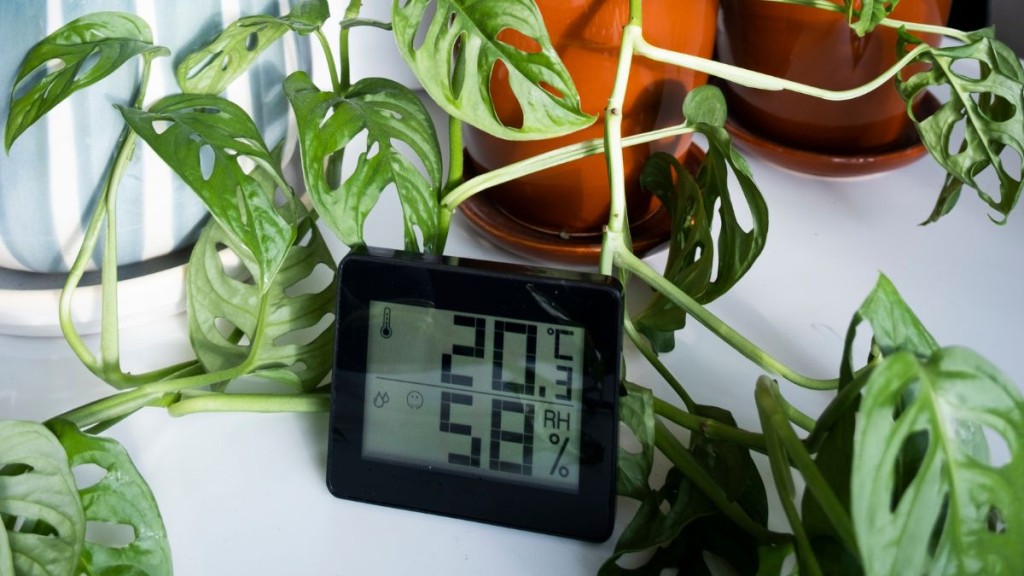
VPD is created by two things working together: temperature and humidity. You cannot control VPD directly — but you can control these two, and VPD follows.
For leafy greens, the goal is simple:
Keep it cool. Keep it slightly humid. The two together create comfortable air for lettuce and spinach.
Here are easy combinations that generally land inside the ideal VPD range of 0.4 to 0.8 kPa:
Temperature | Relative Humidity | Approximate VPD |
18°C (64°F) | 70–75% | ~0.5–0.6 kPa ✅ |
20°C (68°F) | 65–70% | ~0.6–0.7 kPa ✅ |
22°C (72°F) | 65–70% | ~0.7–0.8 kPa ✅ |
24°C (75°F) | 60–65% | ~0.8–0.9 kPa ⚠️ Getting warm |
26°C (79°F) | 55–60% | ~1.0+ kPa ❌ Too dry for leafy greens |
What this table tells you:
As temperature goes up, you need more humidity to keep VPD in the safe zone. If your grow room runs warm and you do not raise humidity to match, the air becomes too dry for lettuce and spinach — even if it feels fine to you.
This is one of the most common problems in warm indoor grow rooms. The temperature feels reasonable, but without enough humidity, the VPD quietly climbs too high and the plants suffer.
The safest starting point for most growers:
If you are just getting started, aim for:
- Temperature: 20–22°C (68–72°F)
- Humidity: 65–70%
This combination is easy to maintain in most indoor setups and lands right in the comfortable zone for leafy greens. It gives you a little room for error in both directions before anything goes wrong.
A word about nighttime conditions
Temperature often drops at night in grow rooms. When it drops, the same humidity level creates a lower VPD — which means the air gets slightly wetter. This is usually fine for leafy greens, but if humidity climbs above 80% for long periods, mold and mildew risk increases. A small drop in temperature at night is welcome. A big one — especially combined with high humidity — needs watching.
Every grow room is a little different. Instead of guessing, plug your actual temperature and humidity into our VPD tool. The interactive chart will show you exactly where your setup lands and whether you need to adjust. If you want to hit a specific VPD target, the tool will recommend the exact temperature and humidity combination to get there — no math needed.
If you want to know the difference between temperature and humidity, read our full guide here.
How VPD Affects Leaf Quality and Taste
Most growers focus on VPD for plant health. But here is something many do not realize — VPD also directly affects how your lettuce and spinach taste.
The air conditions in your grow room do not just change how the plant looks. They change what is happening inside the leaf. And what happens inside the leaf decides the flavor, texture, and quality of what ends up on your plate.
What happens inside the leaf when VPD is wrong
Your plant moves water and nutrients from the roots up through the stems and into the leaves. This movement is driven largely by how much water the plant is releasing through tiny pores on its leaves called stomata. Think of stomata like small doors. VPD controls how wide those doors are open.
When VPD is too high — air too dry — the doors open too wide. Water rushes out of the leaf faster than the roots can send it up. The plant goes into survival mode. It starts pulling resources away from leaf development and focuses on just staying alive. The result:
- Dry, brown leaf edges — especially on outer leaves
- Tip burn on inner leaves — a condition where the leaf edges turn brown and papery because water and calcium cannot reach the tips fast enough
- Bitter taste — stress causes the plant to produce more bitter compounds as a defense response
- Tough or chewy texture — the leaf loses its softness as cells become dehydrated
When VPD is too low — air too wet — the stomata barely open at all. The plant has no reason to pull water upward because the air is not asking for any. Nutrient movement slows down. Growth becomes lazy. The result:
- Pale, washed-out color — leaves look less green because nutrients are not moving properly
- Soft, weak, floppy leaves — cells do not fill out fully, so the leaf has no structure
- Bland, watery taste — low nutrient movement means less flavor development
- Increased disease risk — still, wet air sitting on soft leaves invites mold and rot
The quality connection most growers miss
Lettuce and spinach sold in good markets are crisp, deeply colored, and have a mild, clean flavor. That quality is not just about seeds or soil. It is largely about the air those plants grew in. Growers who maintain the right VPD throughout the grow cycle consistently produce better-tasting, better-looking leaves — because the plant never had to fight its environment.
Even a few days of wrong VPD during the final week before harvest can affect taste. This is when the plant is finishing its leaf development, and stress at this stage locks in poor quality.
If your last harvest had bitter edges or weak leaves, your VPD may have been drifting without you knowing. Check your current conditions in the interactive VPD chart — it will show you immediately whether your air is inside the safe zone for leafy greens. Catching a drift early means better quality at harvest.
Signs Your VPD Is Too High or Too Low
Your plants cannot talk. But they do show you exactly how they feel — if you know what to look for.
Before you ever open a VPD calculator, your lettuce and spinach are already giving you clues. Learning to read those clues turns every walk through your grow room into a quick health check. Here is what your plants are telling you:
When VPD Is Too High — The Air Is Too Dry

When the air is too dry, your plant is losing water faster than it can replace it. It is working hard just to survive. The signs show up quickly in leafy greens because their leaves are so thin and exposed.
Look for:
- Wilting during the day — leaves droop even when the growing medium has enough water. The roots are supplying water, but the dry air is taking it away faster than the plant can keep up.
- Dry or crispy leaf tips — the very edges and tips of leaves turn brown and papery. This is one of the earliest and most reliable signs of air that is too dry.
- Tip burn on inner leaves — the hidden inner leaves of lettuce heads develop brown, burned-looking edges. This happens because water and calcium cannot travel fast enough to reach the innermost leaves when the plant is under dry-air stress.
- Leaves curling upward — the plant tries to reduce the surface area exposed to dry air, so leaf edges curl inward or upward as a protective response.
- Dull or darker green color — the leaf loses its fresh, bright look and starts to appear slightly tired or leathery.
If you see two or more of these signs together, your VPD is very likely above 0.8 kPa. Check your humidity first — it is usually the fastest fix.
When VPD Is Too Low — The Air Is Too Wet

When the air is too wet, the opposite problem happens. The plant has almost no reason to pull water upward because the air is not asking for any. Everything slows down — growth, nutrient movement, and natural defense systems.
Look for:
- Soft, floppy leaves — leaves that should be firm and crisp feel limp and weak. This is not a watering problem. It is a sign that cells are not filling out properly because nutrient and water movement inside the plant has slowed down.
- Pale or washed-out color — leaves look lighter green than they should. Nutrients like nitrogen are not moving efficiently, so the leaf cannot develop its full color.
- Slow, weak growth — plants seem to stall. New leaves come in small and thin. The plant is not in crisis, but it is not thriving either.
- Water droplets sitting on leaves — if you regularly see condensation or water drops staying on leaf surfaces for long periods, your humidity is too high and air movement is likely too low.
- Mold, mildew, or gray fuzzy patches — this is the most serious sign of low VPD over time. Still, wet air sitting on soft leaves creates the perfect conditions for fungal problems. Botrytis (gray mold) is especially common in lettuce grown in overly humid conditions.
- Musty smell in the grow room — before you even see mold, you may smell it. A damp, musty odor is a warning that air moisture has been too high for too long.
If you see soft leaves, pale color, or any sign of mold, your VPD is likely below 0.4 kPa. Increase airflow first, then look at lowering humidity or raising temperature slightly.
Quick Reference: What to Look For
What You See | Likely Cause | What to Check |
Wilting, dry tips, tip burn | VPD too high — air too dry | Raise humidity or lower temperature |
Curling leaves, leathery texture | VPD too high | Check humidity levels |
Floppy, pale, slow growth | VPD too low — air too wet | Improve airflow, reduce humidity |
Mold, mildew, musty smell | VPD too low for too long | Reduce humidity urgently |
Water sitting on leaves | VPD too low, poor airflow | Add circulation fan |
One important reminder: these signs can sometimes overlap with other problems like overwatering or nutrient issues. But if your watering routine has not changed and problems are still appearing, VPD is almost always worth checking first.
Spotted one of these signs in your grow? Do not guess. Enter your current temperature and humidity into the VPD tool right now. The interactive chart will show you exactly where your conditions are sitting — and if you set a target VPD, it will tell you the exact adjustments to make. Catching a VPD problem early saves your harvest.

Real Example From an Indoor Grow Setup
Sometimes the best way to understand something is to see it happen in a real situation. Here is a simple example that shows exactly how one small VPD adjustment made a clear difference in a lettuce grow.
The Setup
A small indoor grower was growing butterhead lettuce under LED lights in a grow tent. The setup was tidy and well-organized. Watering was consistent. Nutrients were on schedule. But something was not right.
The conditions at the time
- Temperature: 24°C (75°F)
- Humidity: 50%
- Approximate VPD: ~1.1 kPa
That VPD was too high for leafy greens. The air was behaving more like a fruiting plant environment than a lettuce environment.
What the Grower Was Seeing
After three weeks of growth, the lettuce looked disappointing:
- The outer leaves had dry, papery edges
- The inner leaves showed early tip burn — brown patches forming on the edges of leaves that had not even fully opened yet
- The heads were smaller than expected for that stage of growth
- When a few outer leaves were tasted, they had a noticeable bitter edge — not terrible, but not the mild, clean flavor good butterhead lettuce should have
The grower had checked watering, nutrients, and light distance. Everything looked fine on paper. But the air conditions had never been checked against a VPD target for leafy greens.
What Was Changed
The grower had been running humidity at 50% because they had read general grow room advice that suggested that range. That advice was written for fruiting plants — not lettuce.
Using the VPD tool, they entered their current temperature and humidity. The chart immediately showed their conditions sitting in the yellow-to-red zone — above what leafy greens need. They set a target VPD of 0.65 kPa — right in the middle of the ideal range for lettuce — and the tool recommended:
- Keep temperature at 24°C (75°F)
- Raise humidity to 68%
That was the only change made. No new equipment. No nutrient adjustment. Just humidity raised by 18 percentage points using the humidifier already in the tent.
What Happened Next
The grower tracked results over the following two weeks:
Before Adjustment | After Adjustment | |
VPD | ~1.1 kPa ❌ | ~0.65 kPa ✅ |
Humidity | 50% | 68% |
Leaf edges | Dry and papery | Clean and smooth |
Tip burn | Visible on inner leaves | Stopped progressing |
Head size | Smaller than expected | Noticeably fuller |
Taste | Slightly bitter | Mild and clean |
New growth that came in after the adjustment was visibly healthier. The tip burn that had already developed did not reverse — damaged tissue stays damaged — but it stopped spreading completely. The new inner leaves came in clean and full.
By harvest, the heads were heavier, the leaves were crisper, and the bitter edge in the flavor was gone.
What This Example Teaches
This grower did not have a watering problem, a nutrient problem, or a light problem. They had an air problem — and it was invisible until they checked it against the right target.
The fix cost nothing. It took two minutes to identify using the VPD tool and one dial turn on a humidifier to apply.
This is exactly why checking VPD matters — especially for leafy greens, where the signs of wrong air conditions show up in taste and texture as much as they show up in plant appearance.
Your setup may be doing the same thing right now without you knowing. Enter your current temperature and humidity into the interactive VPD chart. If your conditions are sitting above 0.8 kPa, try setting 0.65 kPa as your target — the tool will tell you exactly what to adjust to get there, just like it did for this grower.
What Most Growers Get wrong With Leafy Greens
Leafy greens look simple to grow. And in many ways, they are. But that simplicity fools a lot of growers into skipping one critical step — setting the right environment for the right crop.
Most VPD mistakes with lettuce and spinach do not come from carelessness. They come from using the right knowledge in the wrong place. Here are the most common ones — and why they happen.
Mistake 1: Using VPD Targets Meant for Fruiting Plants
This is the single most common mistake — and it quietly ruins more lettuce harvests than almost anything else.
A huge amount of VPD information online is written for tomatoes, peppers, or cannabis. These are fruiting plants that thrive in drier air — typically between 1.0 and 1.5 kPa. That range pushes strong water movement through the plant to support fruit development.
Lettuce and spinach do not need that. They need calm, slightly moist air between 0.4 and 0.8 kPa. When a grower follows fruiting plant VPD advice and applies it to lettuce, the air becomes too dry. The plant loses water faster than it should. Tip burn, bitter taste, and dry edges follow — and the grower often blames nutrients, seeds, or watering instead of the real cause.
The fix: Always look for VPD guidance written specifically for leafy greens. If a VPD chart does not separate crop types, it is giving you incomplete information.
Mistake 2: Keeping the Grow Room Too Dry
Many growers have been told that lower humidity is always safer — that high humidity causes mold and that dry air is clean air. For fruiting plants in late flower or late fruit stage, that is partially true. For leafy greens, it is the wrong approach from day one.
Lettuce and spinach need humidity in the 65–75% range throughout their entire grow cycle. Dropping below that — even to 55 or 60% — combined with a normal grow room temperature quietly pushes VPD above what leafy greens can handle comfortably.
Growers who run dry rooms and then wonder why their lettuce has crispy edges or bitter flavor are often experiencing exactly this. The room looks fine. The humidity does not feel extreme. But the numbers tell a different story.
The fix: Stop thinking of humidity as a risk and start thinking of it as a tool. For leafy greens, moderate-to-high humidity is not a problem — it is part of the recipe.
Mistake 3: Never Checking VPD at All
A surprising number of growers — even experienced ones — manage temperature and humidity as two completely separate numbers. They keep the room at a temperature that feels comfortable and a humidity that feels safe, without ever checking what those two numbers are creating together.
A room at 23°C and 55% humidity feels reasonable. But that combination produces a VPD of around 1.0 kPa — which is at the high end for leafy greens and will show up in leaf quality over time.
VPD is not just a technical detail for advanced growers. It is simply what temperature and humidity create together — and for leafy greens, that combined result matters more than either number alone.
The fix: Check VPD as a combined reading, not as two separate values. Our VPD tool does this instantly — enter your temperature and humidity and it shows you the result immediately, without any math.
Mistake 4: Setting and Forgetting
Some growers dial in their temperature and humidity at the start of a grow and never check again. But grow rooms change. Lights heat the space differently as plants grow taller. Seasonal changes affect ambient temperature. A humidifier runs dry. A vent gets partially blocked.
Any of these small changes can shift VPD outside the safe zone — and if no one is watching, the plants absorb that stress for days or weeks before the signs become obvious.
By the time tip burn or mold appears, the VPD problem has often been present for a long time.
The fix: Check your grow room conditions at least once every day or two — especially during warmer months or when plants are in their fastest growth stage. A quick glance at temperature and humidity takes ten seconds. Running those numbers through the VPD tool takes ten more.
Mistake 5: Ignoring the Final Week Before Harvest
Many growers who manage VPD reasonably well through most of the grow relax their attention in the final week. The plants look almost ready. The heavy work feels done. Conditions drift.
But the final week before harvest is when leaf flavor, texture, and appearance are being locked in. Stress during this stage — even a few days of too-high VPD — can introduce bitterness, reduce crispness, and dull leaf color right before the finish line.
The fix: Hold your target VPD range all the way through to harvest. Do not ease off monitoring in the final days. The effort you put in at the end shows directly in the quality on the plate.
Quick Mistake Summary
Mistake | What It Causes | Simple Fix |
Using fruiting plant VPD targets | Tip burn, bitter taste, dry edges | Use leafy green specific range: 0.4–0.8 kPa |
Keeping air too dry | Crispy edges, stressed plant | Raise humidity to 65–75% |
Never checking VPD | Invisible ongoing stress | Check temperature and humidity together |
Setting and forgetting | Late-stage mold or tip burn | Monitor conditions every one to two days |
Relaxing in the final week | Poor flavor and texture at harvest | Hold target VPD all the way to harvest |
For a deeper look at mistakes growers make across all plant types, see our full guide: Common VPD Mistakes Growers Make.
Not sure if any of these mistakes apply to your current setup? Enter your temperature and humidity into the VPD tool right now. If your numbers are sitting outside the 0.4–0.8 kPa range for leafy greens, the tool will show you immediately — and if you set a target VPD, it will tell you exactly what to change to fix it.
Quick Fix for Better Leaf Growth
This is the fastest and most impactful change most growers can make.
If your humidity is sitting below 65%, raising it to the 65–75% range will bring your VPD down into the safe zone for leafy greens — often without changing anything else. For most grow rooms, this is a single adjustment on a humidifier.
Fix 1: Raise Your Humidity First
This is the fastest and most impactful change most growers can make.
If your humidity is sitting below 65%, raising it to the 65–75% range will bring your VPD down into the safe zone for leafy greens — often without changing anything else. For most grow rooms, this is a single adjustment on a humidifier.
How to do it simply:
- If you have a humidifier, turn it up gradually — not all at once. Raise humidity by about 5% and wait a few hours to see how the room responds.
- If you do not have a humidifier, a simple cool mist humidifier from a hardware store is enough for most small indoor setups. You do not need anything expensive.
- If you are in a greenhouse, check if natural ventilation is pulling too much moisture out during warm parts of the day. Reducing midday venting slightly can help hold humidity up.
Target to aim for: 65–70% relative humidity at your normal grow temperature. That single change fixes the majority of high VPD problems in leafy green setups.
Fix 2: Lower Your Temperature Slightly
If your grow room is running warm — above 23°C (73°F) — dropping the temperature by just 2 to 3 degrees can make a meaningful difference to your VPD without touching humidity at all.
Cooler air naturally holds moisture closer to the plant. It reduces the pressure the air puts on the leaf. And for lettuce and spinach specifically, slightly cooler temperatures also support better flavor development — leafy greens have always grown best in cool-season conditions.
How to do it simply:
- If you use an air conditioner or climate controller, reduce the temperature set point by 2°C (about 3–4°F) and check your VPD again after a few hours.
- If you are using grow lights that produce heat, check how close they are to the canopy. Raising lights slightly can reduce canopy temperature noticeably without changing room temperature settings.
- Run your lights during cooler parts of the day if possible — especially in warm climates where room temperature is harder to control.
A small drop goes a long way. Going from 24°C to 21°C (75°F to 70°F) while holding the same humidity can drop VPD by 0.2 to 0.3 kPa — enough to move from a stressed environment to a comfortable one.
Fix 3: Keep Air Moving Gently
This one is easy to overlook — but it matters more than most growers realize.
Gentle airflow does two important things in a leafy green grow. First, it prevents humid air from sitting still on leaf surfaces, which reduces mold risk even at higher humidity levels. Second, it creates a very thin layer of slightly drier air right at the leaf surface — enough to encourage healthy, gentle transpiration without stressing the plant.
The key word is gentle. Leafy greens do not need strong wind. They need a soft, consistent breeze — enough to make leaves move slightly, not enough to push them around.
How to do it simply:
- Place a small oscillating fan at the side or end of your grow space — not blowing directly onto plants, but circulating air across and around them.
- Aim for air movement that makes the leaves flutter very lightly. If leaves are bending or folding, the fan is too strong or too close.
- Make sure air is moving at canopy level — not just at the top or bottom of the room. That is where it matters most for the plant.
Put All Three Together
These three fixes work even better as a combination. Here is a simple action plan you can apply today:
Step | Action | Time to Take Effect |
1 | Raise humidity to 65–70% | 1–3 hours |
2 | Lower temperature by 2–3°C if above 23°C | 1–3 hours |
3 | Add or adjust a gentle circulation fan | Immediate |
4 | Check VPD with the tool to confirm you are in range | 5 minutes |
You do not need to do all three at once if your conditions are only slightly off. Start with humidity — it is usually the biggest lever. Then adjust temperature if needed. Add airflow last if mold risk is a concern.
One important note: after making any change, give your grow room a few hours to stabilize before taking another reading. Conditions shift gradually — not instantly. Checking too soon can lead to overcorrecting.
What to Expect After Fixing VPD
Do not expect overnight transformation. Leaves that are already damaged — brown tips, tip burn, pale color — will not repair themselves. But new growth that comes in after your adjustment will look noticeably better. Within one to two weeks you should see:
- New leaves coming in cleaner, fuller, and more evenly colored
- Tip burn stopping on new inner leaves
- Improved crispness and texture as harvest approaches
- A milder, cleaner flavor in new growth
The plant cannot undo past stress. But it responds quickly to a better environment — and leafy greens grow fast enough that improvements show up sooner than with most other crops.
Before and after you make these adjustments, use the VPD tool to check your numbers. Enter your temperature and humidity and the interactive chart will show you instantly whether you have moved into the safe zone for leafy greens. Set 0.65 kPa as your target and the tool will confirm exactly which combination of temperature and humidity gets you there — taking all the guesswork out of the process.
Simple Way to Remember This
You do not need to memorize VPD numbers, kPa values, or humidity charts to grow great lettuce and spinach. All of it comes down to one simple idea:
🌿 “Leafy greens like cool and moist air — just like the weather they grow best in naturally.”
Think about where lettuce and spinach grow in the wild. They are cool-season crops. They thrive in early spring and autumn — when mornings are cool, air carries a little moisture, and temperatures are mild. They do not grow well in the middle of summer heat. They never did.
Your grow room is just you recreating that feeling indoors.
When your grow room feels like a cool, lightly humid spring morning, your leafy greens are comfortable. When it feels like a dry summer afternoon, they are struggling — even if everything else looks fine.
That feeling is what a VPD of 0.4 to 0.8 kPa actually means in real life.
Three Memory Anchors
If you want something even simpler to hold onto, use these three:
- Cool is kind. Warmer air pulls harder on your plants. Cooler air is gentler. When in doubt, go slightly cooler rather than slightly warmer for leafy greens.
- Moist is safe. For leafy greens, humidity is not your enemy. Keeping it in the 65–75% range is not a risk — it is part of growing good leaves. Dry air causes more problems in lettuce than slightly humid air does.
- If the air feels comfortable to you on a cool morning, it probably feels comfortable to your lettuce too. This is not a scientific measurement — but it is a surprisingly reliable gut check. Stuffy, dry, warm air is bad for leafy greens. Fresh, cool, lightly humid air is good for them.
The One-Line Reminder
Write this on a sticky note and put it on your grow room wall if it helps:
Cool temp + moderate humidity = happy lettuce.
That is the whole lesson. Everything else in this guide is just the detail behind that one line.
How to Use the Tool as Your Memory
You do not have to remember the exact numbers if you use the VPD tool regularly. Think of it as your memory aid — built in and always ready.
Any time you walk into your grow room and want to know if conditions are right, just check your thermometer and hygrometer, enter those two numbers, and the tool does the rest. It remembers the ranges for you. It shows you whether you are inside or outside the comfort zone. And if you ever forget what to aim for, set 0.65 kPa as your target for leafy greens and let the tool tell you exactly where to set your temperature and humidity.
You focus on growing. The tool handles the numbers.
Bookmark the VPD tool and keep it open during your grow checks. Two numbers in, one clear answer out — it is the simplest way to make sure your memory tip is actually working in your grow room every single day.