
How VPD Affects Plant Growth (Simple Guide)
VPD controls how fast plants move water and nutrients—directly impacting growth, health, and stress levels.
Too high dries plants out and halts growth; too low slows nutrient flow and invites disease. Dialing in VPD—not just temperature or humidity—is the key to consistent, healthy plant growth.
Table of Contents
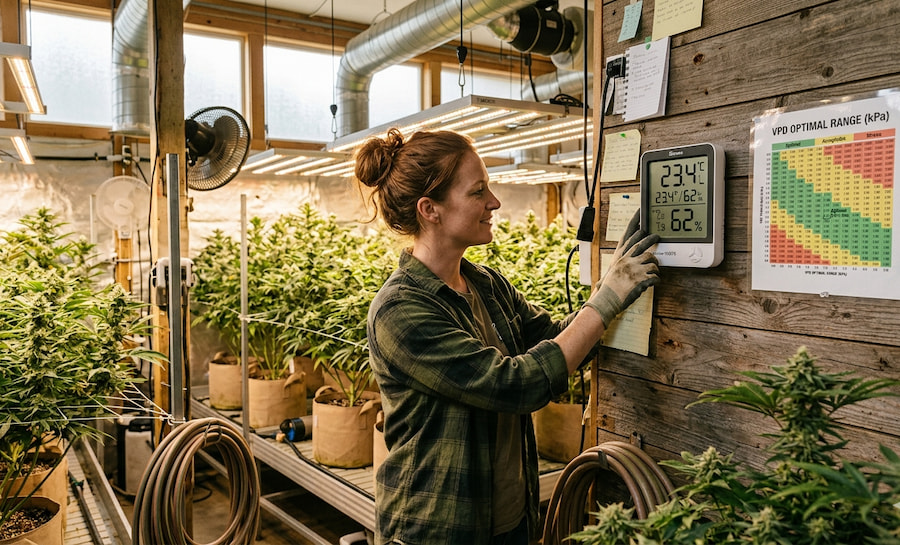
What Is VPD in Simple Words?
Think of VPD like this — imagine you just stepped out of a swimming pool on a hot, windy day. Your skin dries up fast. The air is “thirsty,” so it pulls water off your body quickly.
Now imagine stepping out on a foggy, humid day. You stay wet much longer. The air already has a lot of moisture, so it doesn’t pull water from you as fast.
Plants work the same way.
VPD — Vapor Pressure Deficit — is simply a measure of how thirsty the air is. It tells you how much more moisture the air wants to absorb.
When the air is thirsty (high VPD), it pulls water out of plant leaves faster. When the air is already full of moisture (low VPD), it pulls very little water from the plant.
Plants release water through tiny holes in their leaves called stomata (think of them as the plant’s pores). When the air pulls water through these pores at just the right speed, the plant stays healthy — it moves nutrients, grows strong, and functions properly.
Too fast? The plant gets stressed and dries out. Too slow? The plant gets lazy and can become weak or diseased.
VPD is the number that tells you if that balance is right.
You don’t need to memorize the math. Just remember:
✅ Low number = air is wet and not very thirsty
✅ High number = air is dry and very thirsty
✅ Right number = plant is happy and growing well
If you want to know more about VPD, then check out our guide on Vapour Pressure Deficit (VPD).
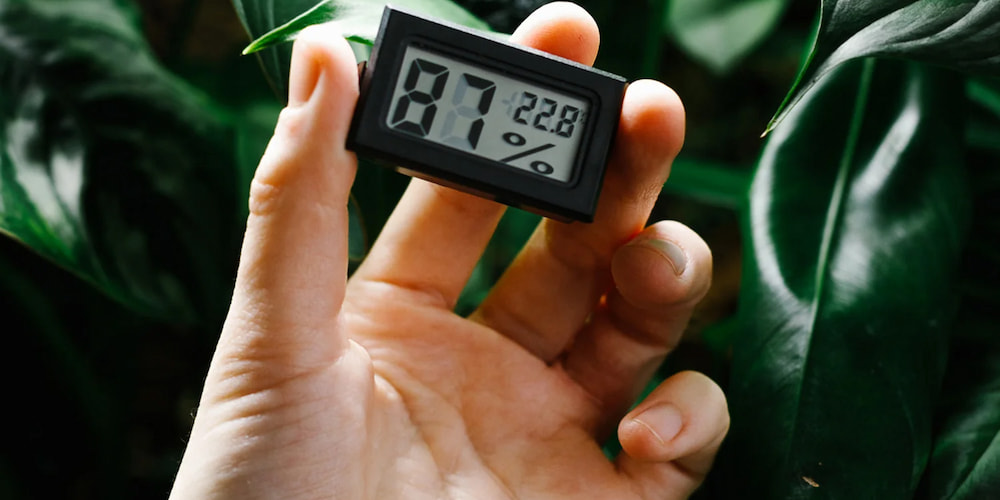
Why VPD Matters for Plant Growth?
Most growers watch their plants closely — checking leaf color, stem strength, and growth speed. But here’s something many don’t realize:
Almost all of those things are controlled by one invisible process — how water moves inside the plant.
And VPD controls that movement.
Here’s how it works in simple steps:
Step 1 — Water enters the roots. The plant drinks water from the soil through its roots.
Step 2 — Water carries nutrients upward. That water doesn’t travel alone. It picks up nutrients from the soil — things like nitrogen, calcium, and magnesium — and carries them up through the plant like a river.
Step 3 — Water exits through the leaves. The plant releases that water as vapor through tiny pores in its leaves. This is called transpiration. Think of it as the plant exhaling.
This movement — from roots to leaves — is what keeps the plant alive and growing.
Now here’s where VPD comes in:
The air around the leaves is what pulls that water out. If the air is thirsty (high VPD), it pulls hard and fast. If the air is already moist (low VPD), it pulls slowly or barely at all.
When the pull is just right:
- Water flows steadily from roots to leaves
- Nutrients reach every part of the plant on time
- The plant grows at its full natural speed
When the pull is too strong (air too dry):
- Water rushes out faster than the roots can replace it
- The plant panics, closes its pores, and slows down
- Nutrients get stuck — they can’t travel without water flow
When the pull is too weak (air too wet):
- Water barely moves inside the plant
- Nutrient delivery slows down
- Growth becomes sluggish, even if everything else looks fine
Simple truth: VPD doesn’t just affect one thing. It affects water, nutrients, and growth — all at the same time. Fix VPD, and you fix all three.

How VPD Controls Transpiration
You breathe air in and out all day without thinking about it. Plants do something similar — except instead of air, they breathe water.
This process is called transpiration.
Here’s how it works:
A plant has thousands of tiny pores on its leaves called stomata. During the day, these pores open up. Water vapor escapes through them into the air. As that water leaves, fresh water gets pulled up from the roots to replace it.
This isn’t just the plant “sweating.” It’s actually how the plant:
- Stays cool
- Moves nutrients from roots to leaves
- Controls its own internal pressure
- Keeps growing
Transpiration is the engine of the plant. VPD controls how fast that engine runs.

Effects of Low VPD (Air Too Humid)
When the air in your grow room is too wet, it might feel like a comfortable, tropical environment for your plants. But looks can be deceiving.
Humid air is lazy air — and it makes your plants lazy too.
Here’s what actually happens when VPD is too low:
The Air Stops Pulling Water From the Plant
Remember — plants move water from roots to leaves because the air pulls it out. When the air is already full of moisture, that pull almost disappears.
It’s like trying to pour water into a full glass. Nothing goes in.
The plant’s internal water flow slows down. Everything that depends on that flow slows down with it.
Growth Becomes Slow and Weak
When water barely moves inside the plant, nutrients move slowly too. Calcium, magnesium, nitrogen — all the building blocks of healthy growth — get delivered late or not at all.
The result? Leaves that look pale or dull. Stems that don’t thicken properly. Plants that seem stuck — alive, but not really thriving.
You might keep feeding them perfectly and still wonder why they aren’t growing. Low VPD is often the hidden reason.
Nutrient Uptake Breaks Down
Some nutrients — especially calcium — can only reach the plant through transpiration flow. They don’t move on their own. They ride the water current.
When that current slows down in high humidity, calcium stops reaching the tips of new leaves. This causes a common problem called tip burn — the edges of leaves turn brown and crispy even when the plant is well-fed.
Low VPD nutrient problems are often misread as feeding problems. Growers add more nutrients — but the real fix is adjusting the air.
Mold and Disease Move In
This is the most dangerous effect of all.
When air is too humid, moisture sits on leaf surfaces and inside the canopy. That standing moisture is exactly what mold, mildew, and fungal disease need to grow.
Powdery mildew — one of the most common and damaging plant diseases — thrives in low VPD conditions. Once it starts, it spreads fast and is very hard to remove.
Botrytis (gray mold) is another serious risk, especially on buds and flowers during late growth stages.
No matter how clean your grow room is, if humidity stays too high for too long — disease will find its way in.
The Tricky Part About Low VPD
Most growers don’t panic when humidity is high. The plants still look green. There’s no obvious danger sign. So the problem gets ignored.
But slow growth, weak feeding, and mold risk are all quietly building in the background.
Simple truth: High humidity doesn’t just feel uncomfortable — it quietly slows your plant down, starves it of nutrients, and opens the door for disease. Low VPD is a slow problem that becomes a big one.

Effects of High VPD (Air Too Dry)
If low VPD makes plants lazy, high VPD puts them into full panic mode.
When the air is too dry, it becomes extremely thirsty. It pulls water out of your plant’s leaves faster than the roots can replace it. The plant feels like it’s running out of water — even if the soil is perfectly moist.
Your plant doesn’t know the soil is fine. It only knows it’s losing water fast. So it goes into survival mode.
Here’s exactly what happens:
Water Leaves the Plant Too Fast
In dry air, the stomata on the leaves are wide open and water vapor rushes out at full speed. The roots are working as hard as they can — but they simply can’t keep up with how fast the leaves are losing water.
Think of it like a leaking bucket. You keep filling it from the top, but the hole at the bottom drains faster than you can pour.
The plant’s internal water pressure — called turgor pressure — starts to drop. This pressure is what keeps leaves firm, stems upright, and cells healthy.
When it drops, everything starts to weaken.
Leaves Start to Curl and Look Stressed
One of the first visible signs of high VPD is leaf curling — leaves fold inward or cup upward at the edges. This is the plant physically trying to reduce the surface area exposed to dry air.
Less surface area = less water escaping.
It’s a survival trick. But it also means the plant is no longer working at full capacity. It’s in defensive mode, not growth mode.
You might also notice:
- Leaf edges turning crispy or brown
- Leaves feeling dry or papery to the touch
- New growth looking twisted or stressed
These aren’t nutrient problems. These are distress signals from a plant losing water too fast.
The Plant Shuts Its Stomata — And Growth Stops
Here’s where high VPD becomes a real growth killer.
When water loss gets too severe, the plant makes a drastic decision — it closes its stomata. This stops water from escaping. Smart survival move.
But stomata don’t just release water. They also let CO₂ in.
No open stomata = no CO₂ entering the plant. No CO₂ = no photosynthesis. No photosynthesis = zero growth.
Your plant is alive, but it has completely paused. It’s just sitting there, surviving — not growing, not feeding, not building.
Heat Makes Everything Worse
High VPD usually comes with high temperatures. And heat speeds up water loss even more.
A hot, dry grow room is the worst possible combination. The plant loses water at maximum speed while simultaneously needing more energy to stay cool. It’s fighting two battles at once.
This is why temperature and humidity must always be managed together — not separately.
The Dangerous Part About High VPD
Unlike low VPD, high VPD shows symptoms fast and clearly. Growers notice curling leaves and reach for the watering can — or assume it’s a nutrient issue and start adjusting their feed.
Both reactions miss the real problem.
More water in the soil doesn’t fix dry air. The leak is at the leaves, not the roots.
Simple truth: High VPD forces your plant into survival mode. It curls its leaves, shuts its pores, stops absorbing CO₂, and halts growth — all to protect itself from air that is too hungry for moisture. The fix isn’t more water. The fix is fixing the air.
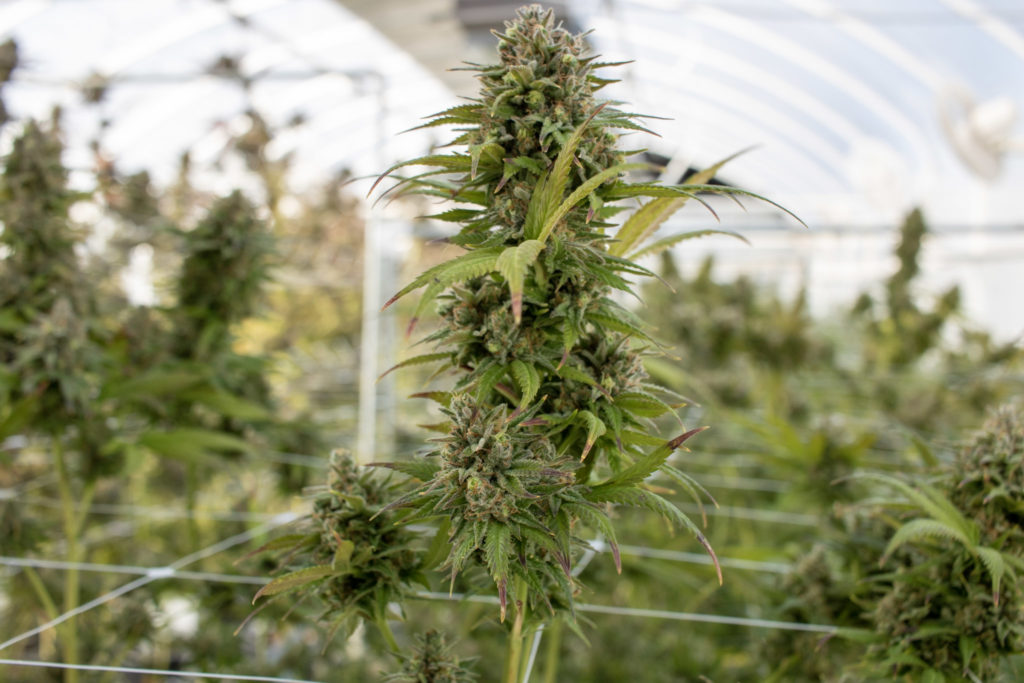
Real Example From a Grow Tent
Let’s walk through a real situation that happens in grow rooms every day.
Meet Andrew. He’s been growing for two years.
Andreq checks his plants one morning and notices something is off. The leaves look slightly dull. Growth has slowed down over the past week. He fed them properly, watered on schedule, and the lights are working fine.
Everything looks right — but the plants aren’t happy.
He checks his environment:
- Temperature: 28°C (82°F)
- Humidity: 40%
- VPD: approximately 2.3 kPa
That VPD number is too high. The air is too dry and pulling water out of his plants aggressively. His plants have been quietly stressed for days — curling their leaves inward and partially closing their stomata.
Andrew doesn’t know it yet, but his plants stopped growing at full speed three days ago.
The Fix — One Small Change
Andrew decides to raise his humidity from 40% to 60%. He doesn’t change anything else. Same temperature. Same lights. Same feeding schedule.
New readings:
- Temperature: 28°C (82°F)
- Humidity: 60%
- VPD: approximately 1.2 kPa
That single adjustment brought VPD right into the healthy green zone.
Within 48 hours Andrew notices:
- Leaves flattening back out
- New growth appearing at the tops
- Plants looking visibly more alive and energetic
He didn’t change his nutrients. He didn’t change his lights. He fixed the air — and the plants responded immediately.
Now Let's Flip the Situation
Same grow room. Different problem.
A week later Andrew notices white powder starting to form on a few lower leaves. Humidity crept back up to 75% overnight because he forgot to check after watering.
- Temperature: 26°C (79°F)
- Humidity: 75%
- VPD: approximately 0.6 kPa
Now VPD is too low. The air is too wet. Powdery mildew found its opportunity.
This time Andrew lowers humidity back to 60% and slightly raises temperature to 27°C. VPD moves back into the safe zone. He catches the mold early enough to treat it.
The difference between a healthy plant and a diseased one was a 15% humidity swing.
What This Example Teaches
You don’t always need to make big changes. VPD is sensitive. Small adjustments to temperature or humidity can shift your VPD significantly — in either direction.
This is why growers who monitor VPD catch problems early. They’re not waiting to see sick plants. They’re reading the air before the plant sends a distress signal.
Simple truth: You can have perfect nutrients, perfect lights, and perfect water — and still have unhappy plants. If the air is wrong, everything else works harder for worse results. Checking VPD takes 10 seconds. Recovering from mold or stress takes weeks.
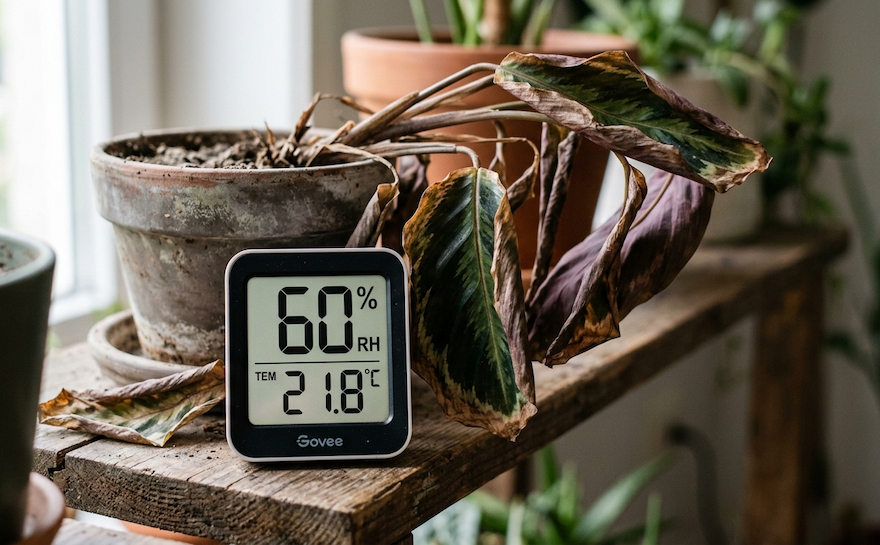
What Most Growers Get wrong About This
After years of growing, most growers develop habits. And one of the most common habits is checking humidity — and only humidity.
That habit is quietly costing them better harvests.
The Most Common Mistake
Ask a grower what they monitor in their grow room. Most will say:
“I keep my humidity around 60% and my temperature around 25°C. That’s what works.”
And on the surface — that sounds responsible. They’re paying attention. They’re making adjustments.
But here’s the problem:
Humidity at 60% means something completely different at 20°C than it does at 30°C.
Same humidity number. Totally different effect on the plant.
This is the mistake. Treating humidity and temperature as two separate dials — when they are actually one combined force that creates VPD.
Why Humidity Alone Lies to You
Imagine two grow rooms:
Room A:
- Temperature: 20°C
- Humidity: 60%
- VPD: approximately 0.7 kPa → slightly low
Room B:
- Temperature: 30°C
- Humidity: 60%
- VPD: approximately 1.7 kPa → too high, plant stress zone
Both growers look at their humidity gauge and see 60%. Both think they’re doing the same thing. But one grower has plants growing slowly in overly moist air. The other has plants curling their leaves under dry stress.
Same number. Opposite problems.
Humidity without temperature context is an incomplete picture. VPD gives you the full picture.
The Temperature-Only Mistake
Some growers do the opposite — they obsess over temperature and barely think about humidity.
“I keep it at 24°C. That’s the perfect temperature.”
But if humidity swings between 40% and 80% throughout the day — which happens easily in a grow room — VPD swings wildly with it. The plant experiences completely different stress levels hour by hour while the thermometer stays exactly the same.
Temperature alone doesn’t tell you what the plant is feeling. Neither does humidity alone.
What You Should Watch Instead
Stop asking: “Is my humidity okay?” “Is my temperature okay?”
Start asking: “What is my VPD right now?”
VPD combines both numbers into one honest reading. It tells you exactly what the air is doing to your plant at this exact moment — regardless of whether temperature or humidity is the cause.
Think of it like this:
Humidity is the ingredient. Temperature is the ingredient. VPD is the recipe result. You can’t judge a meal by looking at ingredients separately — you taste the final dish.
If you've been confused about the difference between VPD and humidity and why one matters more than the other then read our full breakdown here: VPD vs Humidity: What's the Difference?
Quick Fix If Your Plants Look Stressed
Your plants are telling you something is wrong. Leaves curling. Growth slowing. Colors fading. You’ve checked your nutrients and water — everything looks fine.
Before you change anything else — check your VPD first.
Here’s how to fix it quickly, depending on what you find.
Read Your Current Situation
You need two numbers:
- Your temperature
- Your humidity
If you don’t have a digital thermometer and hygrometer in your grow room — get one today. They cost very little and tell you everything.
Once you have both numbers, check them against a VPD chart.
- VPD below 0.8 kPa → Air is too humid. Go to Fix A.
- VPD above 1.6 kPa → Air is too dry. Go to Fix B.
- VPD between 0.8 and 1.6 kPa → Air is in range. Your stress may have another cause.
Fix A — VPD Too Low (Air Too Wet)
Your air has too much moisture. The plant’s water flow has slowed down.
Quick fixes — try one at a time:
- Turn on a dehumidifier or increase its setting
- Increase air circulation with an additional fan
- Slightly raise your temperature by 1–2°C
- Check if recent watering raised humidity and adjust your schedule
Target: Bring humidity down by 10–15% first. Recheck VPD. If still low, try a small temperature increase.
Most plants show improvement within 24–48 hours of correction.
Fix B — VPD Too High (Air Too Dry)
Your air is too hungry for moisture. The plant is losing water faster than it can replace.
Quick fixes — try one at a time:
- Add a humidifier or increase misting frequency
- Lower your temperature by 1–2°C if it’s running hot
- Check if your exhaust fan is pulling too much air out — reduce fan speed slightly
- Ensure your intake air isn’t coming from a very dry external source
Target: Raise humidity by 10–15% first. Recheck VPD. If still high, try a small temperature decrease.
Leaf curling and surface stress usually begin to ease within 24 hours of correction.
The Golden Rule of VPD Fixing
Change one thing at a time.
Every time you adjust temperature, it affects humidity. Every time you adjust humidity, it affects VPD. If you change three things at once, you won’t know what worked — or what made it worse.
One adjustment. Wait 24 hours. Check VPD again. Move from there.
What If It Keeps Going Out of Range?
A one-time fix is easy. But if your VPD keeps drifting out of the healthy zone — humidity spiking after watering, temperature rising under lights, dry air creeping in at night — you need a proper environmental control system.
That means understanding how to manage VPD consistently, not just reactively.
For a complete step-by-step guide on keeping VPD stable long-term then read this next: How to Control VPD in a Grow Room. It covers equipment, automation, and daily routines that keep your environment in the green zone without constant manual checking.
Quick Reference — At a Glance
Symptom | Likely VPD Issue | First Fix |
Leaves curling inward | VPD too high | Add humidity |
Slow growth, dull leaves | VPD too low | Reduce humidity |
Tip burn on new leaves | VPD too low | Improve air flow |
Wilting despite wet soil | VPD too high | Lower temperature |
Mold or white powder | VPD too low | Dehumidify immediately |
Conclusion
You’ve just learned something most growers figure out only after months of frustration.
VPD isn’t a complicated science concept reserved for experts. It’s simply the air around your plant — and whether that air is helping your plant grow or quietly working against it.
Let’s bring it all together in plain language:
What You Now Know
VPD is how thirsty the air is. Too thirsty and your plant panics, closes its pores, and stops growing. Not thirsty enough and your plant gets lazy, feeds poorly, and invites disease.
Transpiration is the plant’s engine. VPD controls how fast or slow that engine runs. Right VPD keeps it running smoothly. Wrong VPD stalls it or burns it out.
Low VPD brings hidden danger. Slow growth, weak nutrient delivery, and mold creeping in while everything still looks green and fine.
High VPD brings visible stress. Curling leaves, crispy edges, and a plant that has quietly shut down photosynthesis to protect itself.
Temperature and humidity are not the goal. They are the tools. VPD is the result. Stop chasing individual numbers — chase the right VPD.
The One Habit That Changes Everything
Before you adjust nutrients, change your lights, or add another supplement — check your VPD first.
Nine times out of ten, a struggling plant is breathing in the wrong air. Fix the air, and everything else starts working better on its own.
It takes 10 seconds to check. It can save you weeks of lost growth.
Where to Go From Here
You understand VPD now. The next step is using it. Use our VPD chart to find your ideal range for each growth stage.