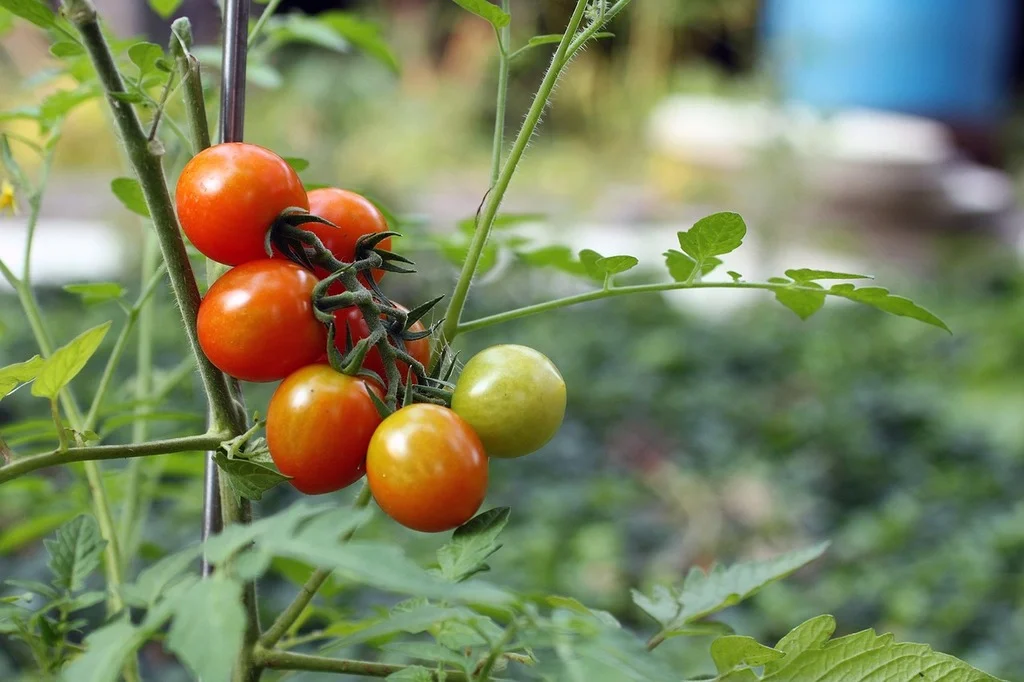
VPD for Tomatoes (Simple Grower Guide)
VPD measures how dry or humid the air feels to tomato plants, directly controlling water flow, nutrient uptake, and fruit development. Keeping VPD in the ideal range (0.8–1.2 kPa, adjusted by growth stage) ensures steady growth, strong plants, and better yields, while imbalances lead to stress, disease, or flower drop. The key takeaway: tomatoes thrive in balanced air—manage temperature and humidity together and monitor VPD regularly to prevent problems before they start.
Table of Contents
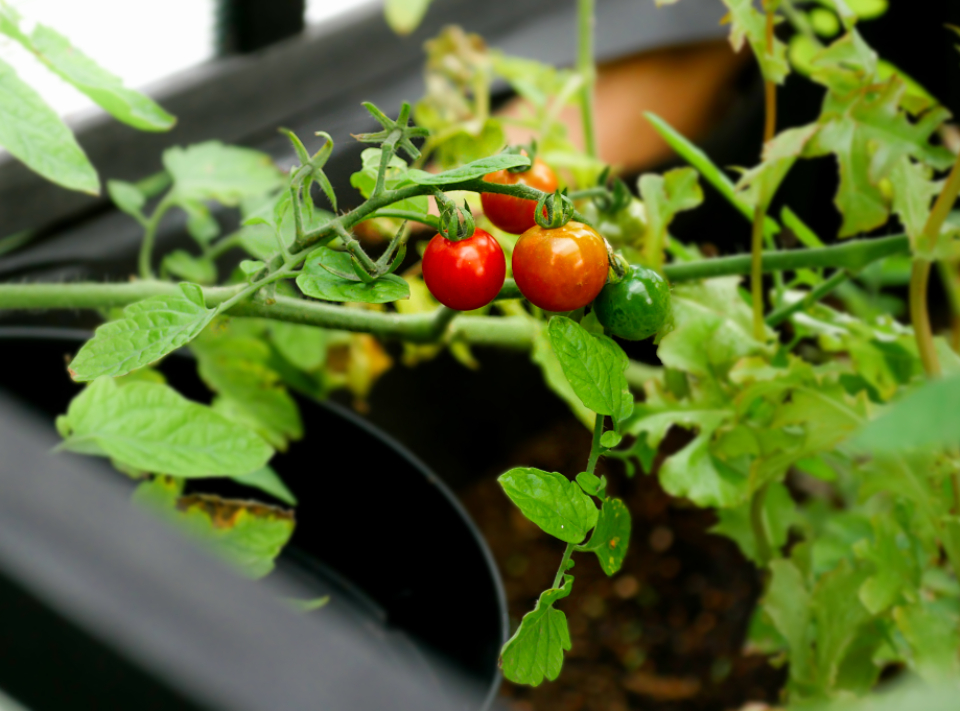
What Is VPD and Why It Matters for Tomatoes
Think of the air around your tomato plants like a sponge. A dry sponge soaks up water fast. A wet sponge can barely take any more. VPD tells you how “thirsty” that air sponge is at any moment.
VPD stands for Vapor Pressure Deficit. In simple words, it measures the difference between how much moisture the air is holding and how much it could hold. The bigger that gap, the more water the air wants to pull from your plant.
Why does this matter for tomatoes?
Your tomato plant breathes through tiny holes in its leaves called stomata. When the air has the right VPD, these holes stay open just enough. Water moves up from the roots, carrying nutrients with it. The plant feeds itself, grows strong, and puts energy into making fruit.
When VPD is too high, the air is too dry and greedy. It pulls water out of the leaves too fast. The plant panics, closes its stomata, and slows everything down. Nutrient flow stops. Fruit development suffers.
When VPD is too low, the air is already too full of moisture. The plant cannot release water properly. Stomata stay sluggish. Growth slows down. Mold and disease become a real risk.
Good VPD means your tomatoes are drinking, feeding, and growing at the right pace — just like they should.
This is why growers who only watch temperature or humidity often still get poor results. VPD connects both numbers into one simple picture of what your plant is actually feeling.
👉 To see exactly where your tomato environment stands right now, use our interactive VPD chart tool. Enter your current temperature and humidity and it instantly shows whether your conditions are in the healthy zone or not. You can even switch between °C and °F depending on what you prefer — a small detail that makes a real difference when you are working quickly in a greenhouse.
Want to go deeper on how VPD directly shapes plant growth? Read our full guide: How VPD Affects Plant Growth.
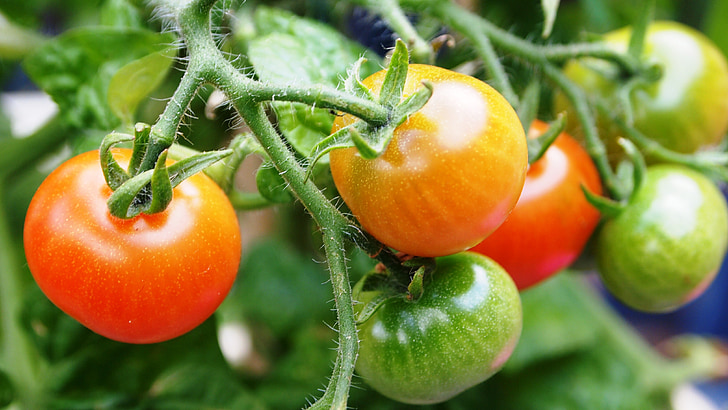
Ideal VPD Range for Tomatoes
Tomatoes grow best when the air is balanced — not too dry, not too wet. In numbers, that sweet spot sits between 0.8 and 1.2 kPa for most stages of growth.
But what does that actually mean for your plant?
At this range, your tomato plant is comfortable. Its stomata are open and working. Water is moving up from the roots smoothly. Nutrients are reaching every part of the plant. The leaves feel firm, not curled or limp. Growth is steady and fruit development moves forward without stress.
Think of it like this. Imagine you are working outside on a warm, slightly breezy day. Not too humid, not desert dry. You are breathing easily, moving well, not sweating too much. That is exactly how your tomato plant feels at the right VPD.
Here is a simple breakdown to keep nearby:
Condition | VPD Range |
Too low — air too wet | Below 0.8 kPa |
✅ Ideal for tomatoes | 0.8 – 1.2 kPa |
Getting high — watch closely | 1.2 – 1.5 kPa |
Too high — plant under stress | Above 1.5 kPa |
One important thing to understand: 0.8 to 1.2 kPa is not a locked rule. It is a target range. Seedlings prefer the lower end. Fruiting plants can handle slightly higher. Growth stage matters, and we will cover that in the next section.
What you want to avoid is spending days outside this range without realising it. Many growers set their temperature and humidity once and never check again. The problem is that both numbers shift throughout the day — especially in greenhouses — and VPD shifts with them.
This is where our VPD chart tool becomes genuinely useful. It does not just show you one number. It shows you the full picture across a range of temperatures and humidity levels at once. You can see your current conditions plotted on the chart and watch in real time whether you are inside the ideal zone or drifting outside it. You can also switch between °F and °C so the numbers always feel natural to you.
If you want to hit a specific VPD target — say 1.0 kPa — the tool will tell you exactly what temperature and humidity combination gets you there. No guessing, no manual math.
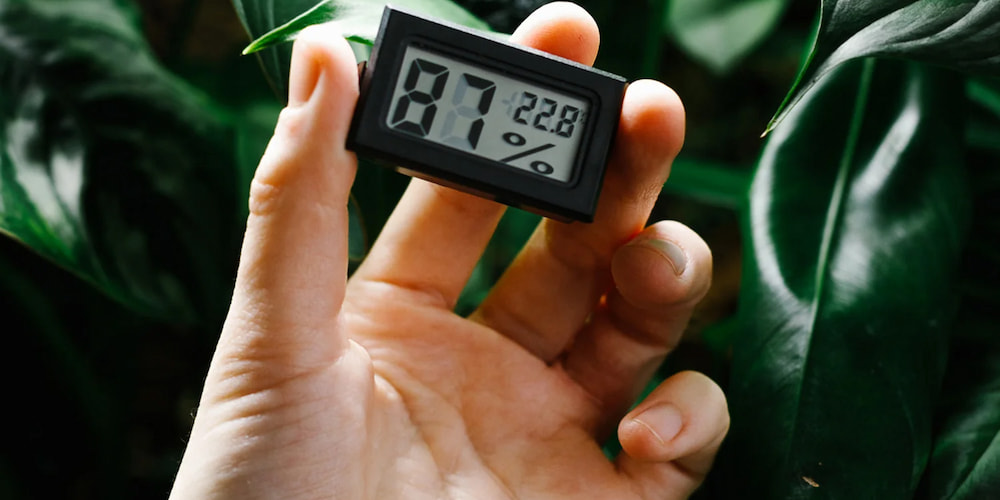
Best Temperature and Humidity for Tomatoes
VPD is controlled by two things: temperature and humidity. You cannot change VPD directly. You change it by adjusting one or both of these numbers. So knowing which combinations work for tomatoes is the most practical thing a grower can have.
Here is the simple truth: there is no single perfect setting. But there are combinations that almost always land your tomatoes in the healthy VPD zone of 0.8 to 1.2 kPa.
These combinations work well for most tomato grows
Temperature (°C) | Temperature (°F) | Humidity (RH%) | Approx. VPD |
20°C | 68°F | 70% | ~0.72 kPa |
22°C | 72°F | 65% | ~0.96 kPa ✅ |
24°C | 75°F | 65% | ~1.05 kPa ✅ |
26°C | 79°F | 60% | ~1.30 kPa |
28°C | 82°F | 55% | ~1.58 kPa ⚠️ |
The highlighted rows are your safest starting points. At 22–24°C (72–75°F) with humidity around 65%, most tomato plants are comfortable, feeding well, and growing steadily.
A few simple rules to remember
When temperature goes up, humidity must go up too — otherwise VPD rises and the air becomes too dry for the plant.
When temperature goes down, humidity should come down slightly too — otherwise VPD drops too low and moisture builds up, increasing disease risk.
They move together. That is the key idea.
Day and night matter too.
Tomatoes do not need the same conditions around the clock. During the day, when lights are on or the sun is bright, temperatures are higher. A slightly higher VPD is fine because the plant is actively growing. At night, temperatures drop naturally. Humidity often rises. Keeping an eye on both periods separately helps you avoid problems that only show up at night — like mold or poor fruit set.
A good starting point for most indoor and greenhouse tomato growers:
- Daytime: 22–25°C (72–77°F) at 60–65% humidity
- Nighttime: 18–20°C (64–68°F) at 65–70% humidity
These are not rigid rules. They are a reliable starting place.
The best way to confirm your specific setup is to plug your actual temperature and humidity numbers into our VPD tool. It instantly shows your real VPD value, plots it on the interactive chart, and tells you whether you are in the right zone for tomatoes. Since the tool supports both °C and °F, you can work in whatever unit feels natural without doing any conversions yourself.
If your numbers are off, the tool’s recommendation feature tells you exactly how to adjust — raise humidity by this much, lower temperature by that much — until you land in the ideal zone.
How VPD Changes During Tomato Growth Stages
Your tomato plant is not the same plant from seed to harvest. It changes. And as it changes, what it needs from the air changes too.
Think of it like a person growing up. A baby needs a warm, gentle environment. A teenager can handle more. A working adult needs different conditions entirely. Tomatoes are the same way.
Here is how each stage works:
Stage 1: Seedlings (0.4 – 0.8 kPa)
A seedling is fragile. Its roots are tiny and cannot move much water yet. If the air is too dry, the seedling loses water faster than its small roots can replace it. That causes stress before the plant even gets started.
At this stage, you want the air to be gentler — more humid, slightly cooler. A VPD of 0.4 to 0.8 kPa keeps things soft and safe. The plant stays moist, stomata stay gently open, and early root and leaf development happens without stress.
Do not push seedlings into dry air to “toughen them up.” It does not work that way. It just slows them down.
Stage 2: Vegetative Growth (0.8 – 1.0 kPa)
Now the plant is growing fast. Roots are stronger. Leaves are multiplying. The plant is building its structure — stems, branches, and the framework that will hold fruit later.
At this stage, a slightly drier air helps. A VPD of 0.8 to 1.0 kPa keeps stomata open and working steadily. Nutrients move up through the plant efficiently. Growth is fast and strong.
This is the stage where consistent VPD matters most. Swings up and down during vegetative growth can create uneven development — some branches strong, others weak.
Stage 3: Flowering and Fruiting (1.0 – 1.2 kPa)
The plant is now doing its most important work — making flowers and turning them into tomatoes. This takes enormous energy and a lot of water movement.
A slightly higher VPD of 1.0 to 1.2 kPa pushes the plant to move water and nutrients more actively. This supports better pollination, stronger fruit set, and improved fruit size and flavor.
Be careful here. If VPD climbs above 1.2–1.5 kPa during fruiting, flowers can drop before setting fruit. This is one of the most common and frustrating problems tomato growers face — and VPD is often the hidden cause.
Quick Reference Table:
Growth Stage | VPD Target | Key Goal |
Seedling | 0.4 – 0.8 kPa | Gentle moisture, safe development |
Vegetative | 0.8 – 1.0 kPa | Strong growth, nutrient flow |
Flowering & Fruiting | 1.0 – 1.2 kPa | Fruit set, flavor, yield |
The most common mistake growers make is setting one environment and leaving it the same for the entire grow. What works for a seedling will hold back a fruiting plant. What works for fruiting will stress a seedling.
As your tomatoes move through each stage, your target VPD should move with them.
Our VPD tool makes this easy to manage. When you set a target VPD for your current growth stage, the tool gives you the exact temperature and humidity combination to achieve it. You do not need to memorize numbers or do any calculations. Just update your target as your plants grow and follow the recommendations. The interactive chart also lets you see your current conditions plotted in real time so you always know where you stand.
Signs Your VPD Is Too High or Too Low
Your tomato plant cannot speak. But it shows you exactly how it feels through its leaves, flowers, and overall appearance. Learning to read these signs is one of the most valuable skills a grower can have.
The good news is the signs are not subtle. Once you know what to look for, they are hard to miss.
When VPD Is Too High — The Air Is Too Dry
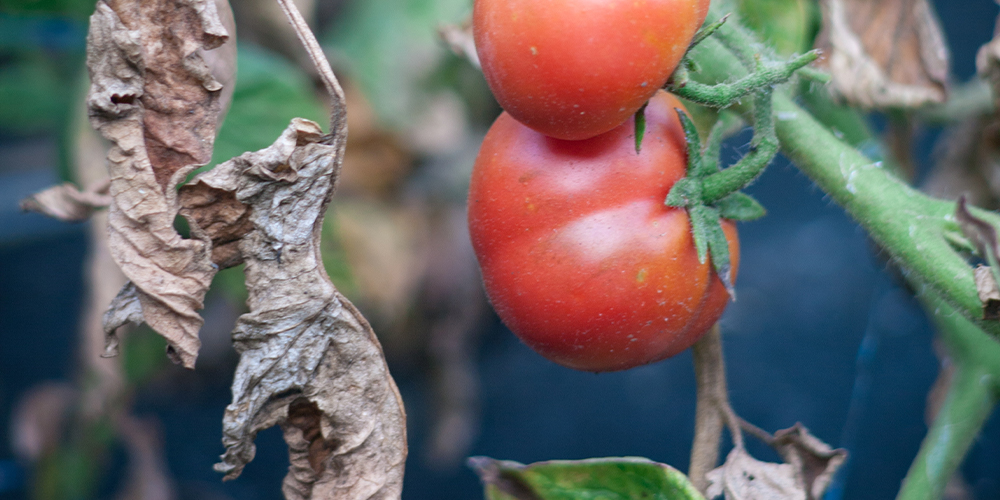
High VPD means the air is pulling water out of your plant faster than the roots can replace it. The plant goes into survival mode. Here is what you will see:
Leaf curling or cupping: The edges of leaves curl upward or inward. This is the plant trying to reduce the surface area exposed to dry air. It is protecting itself from losing more water. If you see this during the day and leaves recover at night, high VPD is a likely cause.
Flower drop: Flowers appear but fall off before becoming fruit. This is one of the most frustrating signs for tomato growers. When VPD is too high during flowering, the plant is under water stress and cannot support fruit development. It drops flowers to conserve energy.
Slow or stunted growth: The plant looks healthy but is not growing at the rate it should. When stomata close to protect against dry air, nutrient flow slows down. The plant is essentially holding its breath. Growth stalls.
Dry or crispy leaf edges: Leaf tips and edges turn brown and dry. This often gets blamed on nutrient problems. But if your feeding is correct and you still see brown edges, check your VPD before changing your nutrients.
When VPD Is Too Low — The Air Is Too Wet
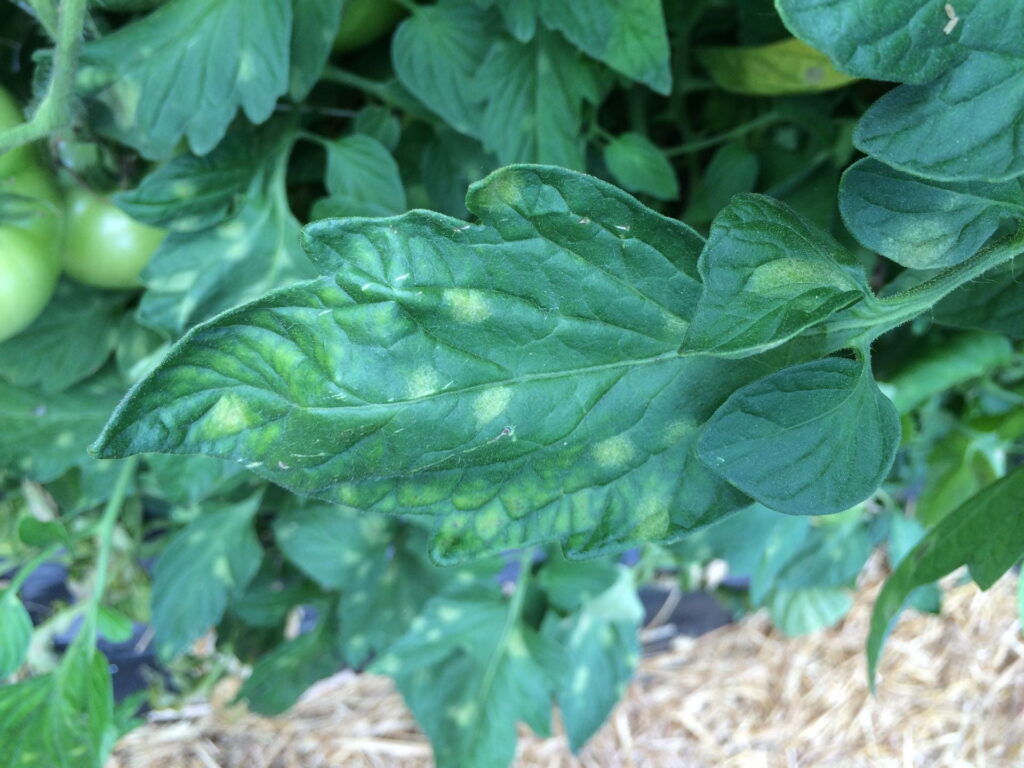
Low VPD means the air is already full of moisture. The plant cannot release water properly. Everything slows down or gets risky. Here is what you will see:
Mold and white powder on leaves: Wet, stagnant air is the perfect breeding ground for mold, powdery mildew, and fungal disease. If you are seeing white patches, grey fuzz, or soft brown spots on your plants, low VPD combined with poor airflow is almost always part of the problem.
Weak, soft stems: When VPD is too low for too long, plants do not develop strong stems. The plant has no reason to build strong structure because it never experiences any healthy water movement stress. Stems stay thin and floppy.
Pale or yellowing leaves: Nutrient uptake depends on water movement through the plant. When VPD is too low and that movement slows, nutrients do not reach the leaves efficiently. Yellowing that starts from the lower leaves upward is a common sign.
Condensation on leaves or surfaces: If you see water droplets sitting on leaves or on greenhouse surfaces in the morning, your nighttime VPD is too low. This moisture sitting on the plant is an open invitation for disease.
Quick Sign Checker:
What You See | Likely Cause | VPD Direction |
Leaf curling upward | Plant losing water too fast | Too High ⬆️ |
Flower drop | Water stress during fruiting | Too High ⬆️ |
Slow growth, closed stomata | Plant in survival mode | Too High ⬆️ |
Brown, crispy leaf edges | Water deficit in leaves | Too High ⬆️ |
Mold or powdery mildew | Wet stagnant air | Too Low ⬇️ |
Weak, floppy stems | Poor water movement | Too Low ⬇️ |
Yellowing lower leaves | Slow nutrient uptake | Too Low ⬇️ |
Condensation on surfaces | Excess moisture at night | Too Low ⬇️ |
Here is something important to understand. These signs do not appear the moment VPD goes wrong. They build up over hours and days. By the time you see leaf curl or mold, your environment has likely been off for a while.
This is why checking VPD regularly matters more than reacting to symptoms. Our VPD tool lets you monitor your conditions before problems develop. Enter your current temperature and humidity and the interactive chart immediately shows whether you are in a safe zone or heading toward trouble. Catching a drift early — before flowers drop or mold appears — saves your crop and saves you time.
If you are already seeing symptoms, use the tool’s target feature. Set your ideal VPD and get clear recommendations on how to bring your environment back in line quickly.
Real Example From a Grow Tent
Sometimes the best way to understand something is to see it happen in real life. Here is a simple, real-world example of how one greenhouse grower identified a VPD problem and fixed it — with clear results.
The Situation
A small greenhouse tomato grower was in the middle of the fruiting stage. Plants looked mostly healthy. Watering and feeding were on schedule. But something was wrong.
Flowers were dropping before setting fruit. Yield was noticeably lower than the previous season. A few plants had leaf edges that were dry and slightly curled. The grower assumed it was a nutrient problem and adjusted the feeding schedule. Nothing improved.
What Was Actually Happening
A friend suggested checking VPD. The grower measured temperature and humidity and entered the numbers into a VPD tool.
The readings were:
- Temperature: 27°C (81°F)
- Humidity: 50%
- Calculated VPD: 1.75 kPa
The chart showed the conditions sitting clearly in the red zone — well above the ideal 1.0 to 1.2 kPa range for fruiting tomatoes.
The air was too dry. The plants were under constant water stress. Stomata were closing during the warmest parts of the day. Nutrients were not moving properly. Flowers were dropping because the plant simply could not support fruit development under that level of stress.
The nutrient feeding was never the problem. The air was.
The Fix
The grower made two simple changes:
- Increased humidity from 50% to 63% using a greenhouse humidifier
- Added a small circulation fan to keep air moving evenly and prevent wet spots
New readings after adjustment:
- Temperature: 27°C (81°F)
- Humidity: 63%
- Calculated VPD: 1.08 kPa ✅
The conditions moved from the red zone straight into the ideal green zone for fruiting tomatoes.
What Changed After the Fix
Results were visible within one week:
Observation | Before Fix | After Fix |
Flower drop | Frequent | Rare |
Leaf curl | Present on multiple plants | Disappeared |
New fruit setting | Slow and inconsistent | Strong and consistent |
Overall plant appearance | Stressed, slightly dull | Healthy, deep green |
Estimated yield improvement | — | Around 25–30% more fruit set |
Nothing else changed. Same nutrients. Same watering. Same seeds. Only the VPD changed.
What This Grower Learned
Three things stood out from this experience:
First, visible plant symptoms are often the last sign of a problem, not the first. The VPD had been too high for weeks before the flower drop became obvious.
Second, guessing the cause wastes time and money. Changing nutrients, adjusting watering, and trying different sprays all cost time. One VPD check gave the real answer in minutes.
Third, small environment changes create big results. Raising humidity by 13% cost almost nothing. The yield improvement was significant.
This kind of problem happens in greenhouses everywhere, every season. The grower in this example was experienced and careful. But without checking VPD directly, the real cause stayed hidden.
Our VPD tool would have caught this immediately. Enter your temperature and humidity, and the interactive chart shows your exact position in real time — green zone, yellow zone, or red zone. If you are off target, set your ideal VPD for your current growth stage and the tool tells you exactly what to change and by how much. No guessing. No wasted weeks.
If this grower had checked VPD at the start of the fruiting stage, the flower drop may never have happened at all.
What Most Growers Get wrong With Tomato VPD
Most growers who struggle with tomato VPD are not making big mistakes. They are making small, common ones. The kind that are easy to miss because they seem logical at the time.
Here are the most important ones to know — and avoid.
Mistake 1: Watching Humidity and Ignoring Temperature
This is the most common mistake of all.
A grower sees their humidity sitting at 65% and feels confident. But humidity alone does not tell you what your plant is experiencing. A 65% humidity reading at 20°C (68°F) gives a very different VPD than 65% humidity at 28°C (82°F).
Temperature and humidity work together. You cannot manage one without the other. Growers who only watch humidity are only seeing half the picture — and making decisions based on incomplete information.
VPD combines both numbers into one clear value. That is why it matters.
Mistake 2: Setting One Environment for the Whole Grow
Many growers set their temperature and humidity at the start of the season and leave it unchanged until harvest. This feels efficient. It is actually holding back results at every stage.
As we covered earlier, a seedling needs a VPD of around 0.4 to 0.8 kPa. A fruiting plant needs 1.0 to 1.2 kPa. Running fruiting conditions on seedlings stresses them. Running seedling conditions during fruiting weakens fruit set.
The environment should grow with the plant. Not stay fixed while the plant changes around it.
Mistake 3: Ignoring Airflow
This one is surprisingly overlooked.
Even if your temperature and humidity numbers look perfect on paper, poor airflow creates invisible problem zones inside your greenhouse or grow room. Hot, humid pockets build up near the canopy. Stagnant air sits between dense leaf areas. One corner of your space may have a completely different microclimate than the rest.
Your hygrometer reads one spot. Your plants experience every spot.
Good airflow distributes temperature and humidity evenly across the whole growing area. Without it, some plants are living in a different VPD environment than others — even in the same room.
Circulation fans are one of the cheapest and most effective tools in any grow space. They are not optional when managing VPD seriously.
Mistake 4: Only Checking VPD When Something Goes Wrong
VPD problems build quietly over time. By the time you see leaf curl, flower drop, or mold, your environment has likely been off for days.
Many growers treat VPD as a diagnostic tool — something to check when there is a problem. The growers who get consistently better results treat it as a monitoring habit. They check conditions regularly, not reactively.
Catching a VPD drift early — before it causes visible symptoms — is far easier than recovering a stressed plant.
Mistake 5: Trusting Feel Over Numbers
Experienced growers develop a sense for their environment. Walking into a greenhouse and feeling whether it is too dry or too humid is a real skill. But feeling is not precise enough for consistent results.
Air that feels comfortable to a human can still be outside the ideal VPD range for a tomato plant. Plants are more sensitive than we are. A small drift in humidity or temperature that barely registers to you can push your VPD out of the healthy zone for hours.
Numbers confirm what feeling cannot.
Mistake 6: Not Accounting for Day and Night Shifts
Temperature naturally drops at night. Humidity naturally rises. Many growers check their environment during the day, see good numbers, and assume everything is fine overnight.
But nighttime is often when VPD drops too low. Moisture builds up. Condensation forms on leaves and surfaces. Mold begins to develop in the dark when no one is watching.
A good VPD management habit includes checking both daytime and nighttime conditions separately.
Quick Mistake Checklist:
Common Mistake | Simple Fix |
Watching only humidity | Always check temperature and humidity together |
Fixed environment all season | Adjust VPD target at each growth stage |
Poor or no airflow | Add circulation fans throughout the space |
Only checking when problems appear | Monitor VPD regularly as a habit |
Trusting feel over numbers | Use a tool to confirm actual VPD value |
Ignoring nighttime conditions | Check VPD during day and night separately |
The encouraging thing about all of these mistakes is that they are fixable. None of them require expensive equipment or major changes. They require a shift in habit and the right information at the right time.
Our VPD tool directly addresses most of these mistakes in one place. It combines temperature and humidity into a single VPD reading so you never rely on one number alone. The interactive chart shows your full environment picture — not just a single data point. You can check conditions for different times of day, adjust for your current growth stage, set a target, and get clear recommendations on exactly what to change. It works in both °C and °F so there is no friction between you and accurate monitoring.
The growers who use it regularly stop reacting to problems. They start preventing them.
Quick Fix to Improve Tomato VPD
If your tomato VPD is off right now, the good news is that fixing it does not require expensive equipment or complicated changes. Most VPD problems can be solved with three simple actions: adjusting humidity, managing temperature, and improving airflow.
Here is how to do each one quickly and practically.
Fix 1: Adjust Your Humidity First
Humidity is usually the easiest variable to change. It responds faster than temperature and gives you more precise control over your VPD in the short term.
If VPD is too high — air is too dry: Raise humidity. The fastest ways to do this are running a humidifier, misting the floors or walls of your greenhouse, or reducing ventilation temporarily to hold more moisture inside.
Aim to raise humidity in small steps — around 5% at a time. Check your VPD after each adjustment before raising it further. Moving too fast creates the opposite problem.
If VPD is too low — air is too wet: Lower humidity. Run a dehumidifier, increase ventilation to bring in drier outside air, or increase temperature slightly to help the air hold more moisture without raising the relative humidity percentage further.
Again, move in small steps. Sudden large drops in humidity stress plants almost as much as having the wrong VPD for weeks.
Fix 2: Manage Temperature Carefully
Temperature changes affect VPD more dramatically than humidity changes do. A small temperature rise can push VPD up significantly even if humidity stays the same.
If VPD is too high: Lower temperature slightly if possible. Even a drop of 1 to 2°C (2 to 4°F) can bring VPD back into a healthy range without touching humidity at all. Use shading, ventilation, or cooling equipment depending on your setup.
If VPD is too low: Raise temperature gently. Warmer air holds more moisture without the relative humidity percentage increasing. This raises VPD naturally and helps dry out a stagnant environment.
One important rule: never change temperature and humidity at the same time unless you are certain of the outcome. Change one, measure the new VPD, then decide if the other needs adjusting too.
Fix 3: Improve Airflow Immediately
This fix costs the least and is the most overlooked.
Even perfect temperature and humidity numbers mean very little if your air is not moving. Stagnant air creates uneven conditions across your growing space. The VPD near your canopy can be completely different from the reading your sensor shows.
Simple airflow fixes:
Add at least one circulation fan aimed across the canopy — not directly down onto plants, but moving air horizontally through the space. This breaks up humid pockets and keeps conditions even.
If you already have fans, check that they are reaching all areas. Dense plant growth blocks airflow easily. Adjust fan positions as plants grow taller and fuller.
Open vents or windows during periods of high humidity to bring in fresher air. Even brief ventilation can reset a stagnant environment quickly.
Fix 4: Make Small Changes and Measure Again
This is the most important rule of all.
Do not make multiple changes at once and wait to see what happens. Make one change, wait 15 to 20 minutes, measure your new temperature and humidity, and check your VPD again. Then decide on the next step.
Growers who change everything at once often overshoot and end up with a new problem in the opposite direction. Small, measured steps get you to the target faster and keep you there more reliably.
Quick Fix Summary:
Problem | First Action | Second Action |
VPD too high — dry air | Raise humidity 5% | Lower temperature 1–2°C if needed |
VPD too low — wet air | Lower humidity or ventilate | Raise temperature slightly if needed |
Uneven conditions across space | Add or reposition circulation fans | Check multiple spots in your grow area |
Conditions stable but wrong | Set target in VPD tool | Follow specific recommendations given |
How Quickly Can You Expect Results?
Environmental changes show results in the plant within 24 to 72 hours for most symptoms. Leaf curl from high VPD often relaxes within a day of correction. Mold risk from low VPD reduces as soon as conditions improve. Flower drop from stress takes slightly longer to recover — usually one full flowering cycle — but new flowers will set properly once VPD is stable.
Patience and consistency matter more than speed here.
The fastest way to know exactly what to change is to use our VPD tool right now. Enter your current temperature and humidity. The interactive chart shows your exact position instantly. If you are outside the ideal zone, set your target VPD for your current growth stage and the tool gives you a specific recommendation — raise humidity to this level, adjust temperature to this point — so you are not guessing what to fix or by how much.
It works in both °C and °F so you can work directly in the units you already use without any conversion.
For a deeper guide on setting up your grow room environment for consistent VPD control, read our full guide: How to Control VPD in a Grow Room.
Simple Way to Remember This
You have learned a lot in this guide. VPD ranges, growth stages, symptoms, fixes. That is a lot to carry in your head while you are standing in a greenhouse checking your plants.
So here is one simple idea to anchor everything.
Tomatoes like balanced air — not too wet, not too dry.
That is it. That is the whole guide in one sentence.
When the air is balanced, your tomato plant drinks steadily, feeds itself properly, grows strong, and sets fruit the way it should. Everything works the way nature intended.
When the air is too dry, the plant is thirsty and stressed. It closes up, slows down, and drops flowers to survive.
When the air is too wet, the plant is suffocating in moisture. It grows weak, invites disease, and cannot move nutrients properly.
Balanced air is not complicated. It just needs to be checked and maintained — especially as your plants grow and the seasons change around them.
One Simple Rule for Each Stage:
If remembering numbers feels like too much, use these plain language reminders instead:
Growth Stage | Simple Reminder |
Seedling | Keep it gentle and slightly humid |
Vegetative | Freshen the air a little — plants are working hard |
Flowering and Fruiting | Keep it balanced — not too dry or fruit will not set |
The One Habit That Makes Everything Easier
You do not need to memorise every number in this guide. You need one reliable habit.
Check your VPD regularly. Not just when something looks wrong. Regularly.
A quick temperature and humidity check takes less than a minute. Plugging those numbers into our VPD tool takes ten seconds. The chart shows you immediately whether your air is balanced, too dry, or too wet. If it is off, the tool tells you exactly what to adjust.
That one habit — checking before problems appear — is what separates growers who consistently get good yields from growers who spend the season reacting to symptoms.
If You Remember Nothing Else, Remember This:
Your tomato plant is not complicated. It wants balanced air, steady water movement, and nutrients flowing freely from root to fruit.
VPD is simply the number that tells you whether that balance exists right now.
Keep it in the green zone. Check it regularly. Adjust gently when it drifts. That is the whole practice.